Reading the land
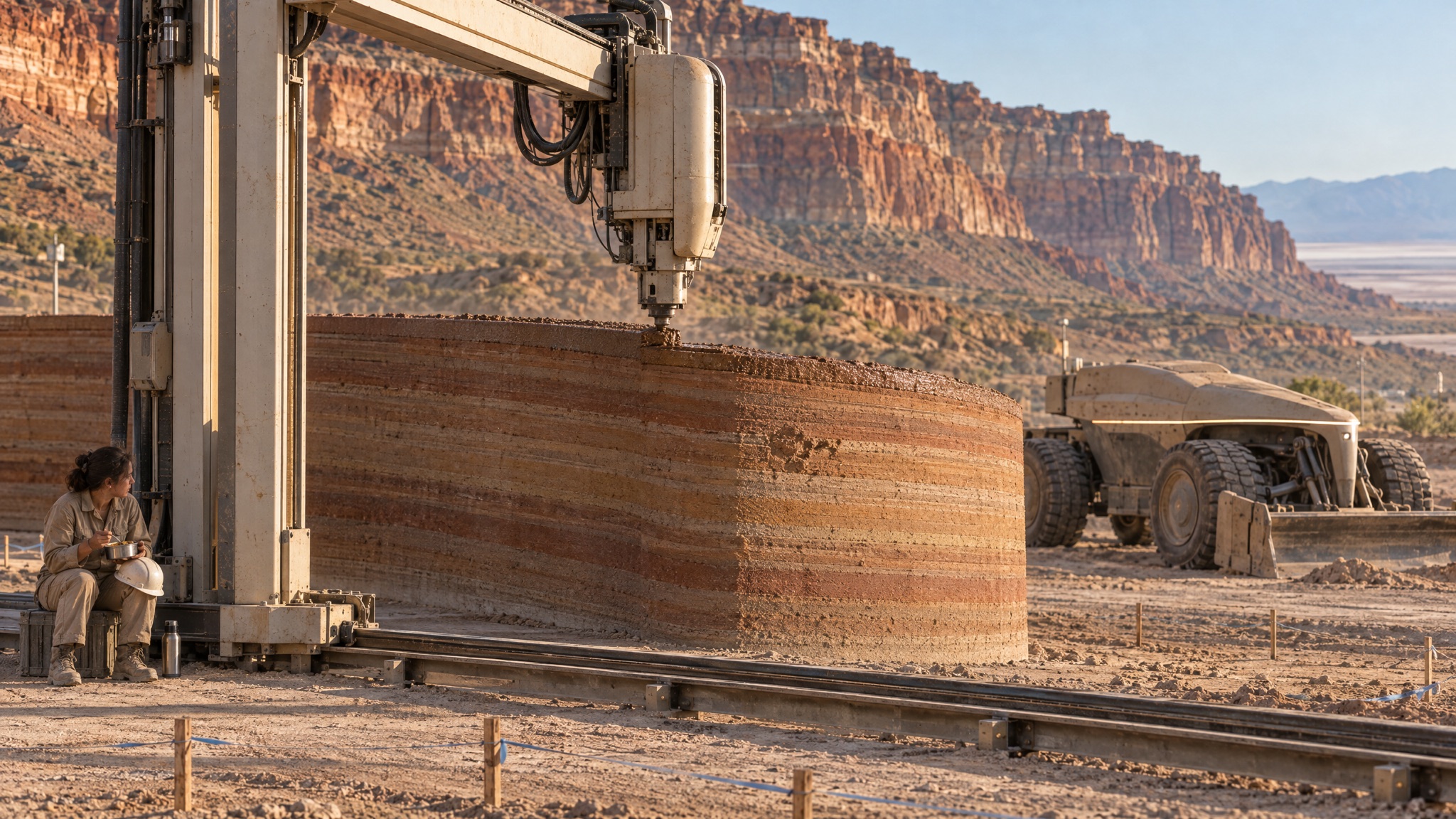
Ninety percent of the plain stays untouched in the first year. Survey stakes bend around the washes, a nursery salvages the native plants, and two gantry printers raise the first ochre wall.
Year2026
Rooted here. Ready for anything.
Basin, day one. Fixed camera, 2,500 m.
Move across the basin to look through to 2075
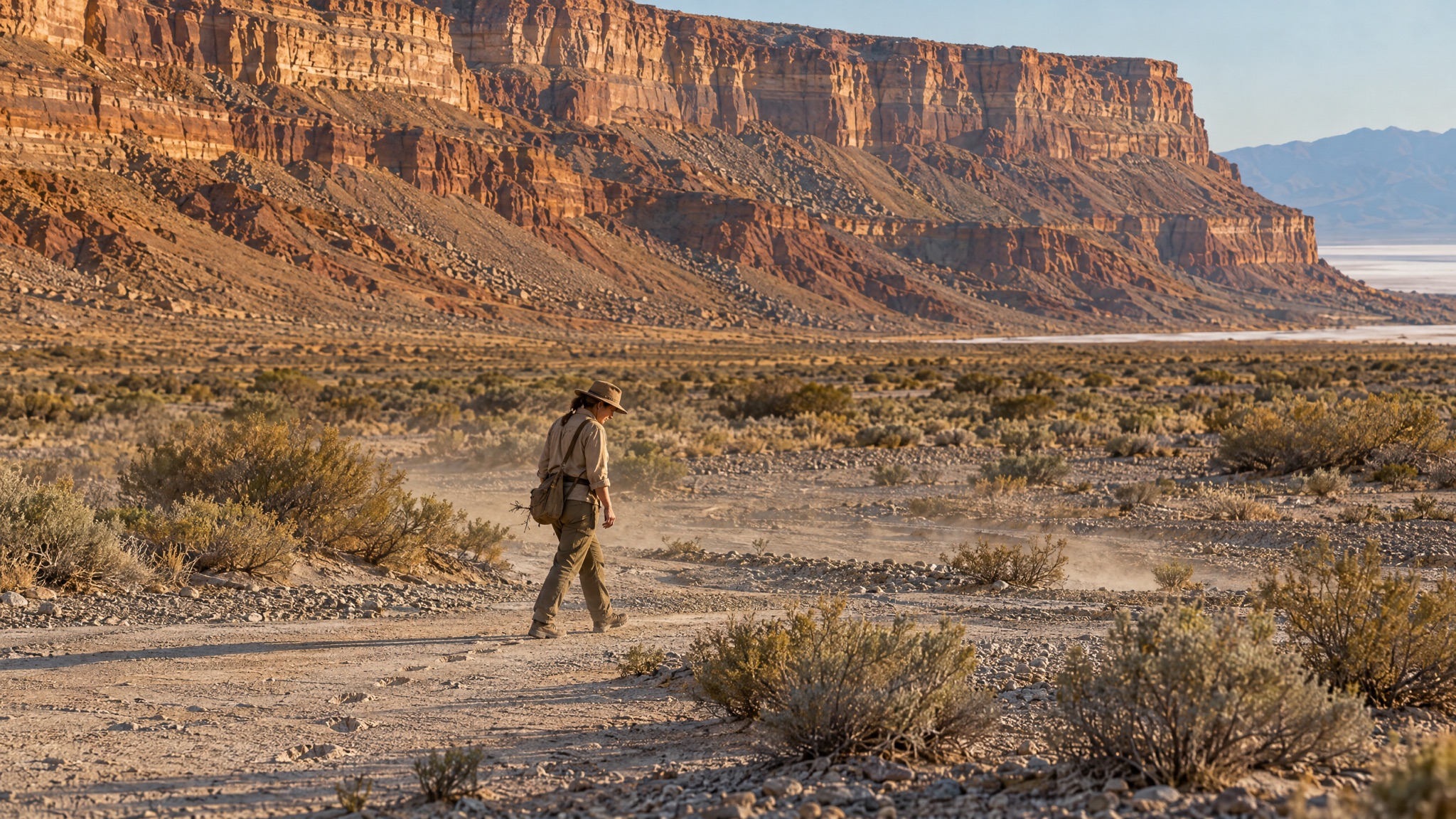
Most installations are dropped onto land and fight it for a century. TAPROOT begins the other way: a year of reading one coastal basin before anything is built. The washes are flagged and kept, the topsoil and plants are salvaged, and the first wall is printed from the ground it stands on.
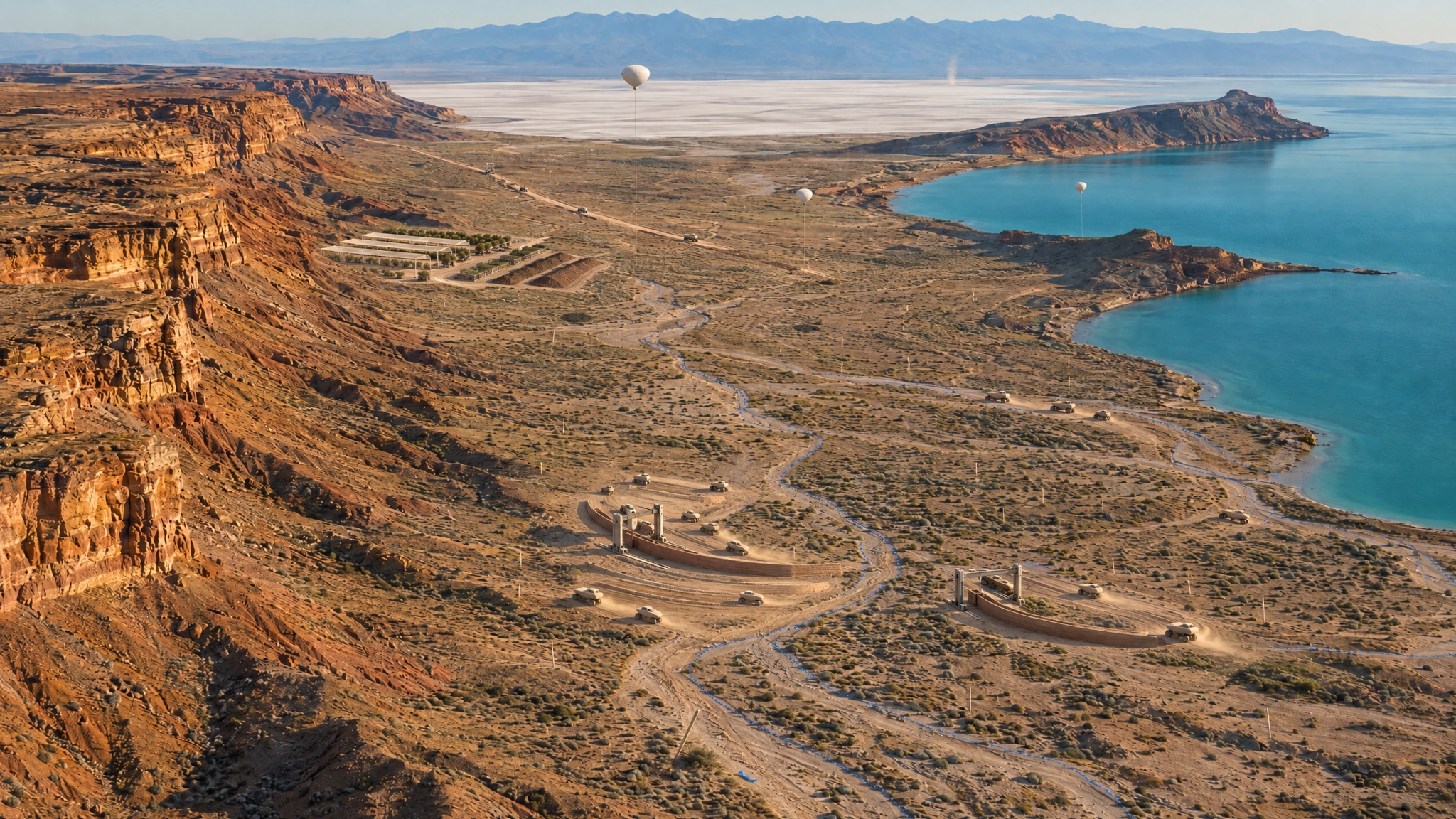
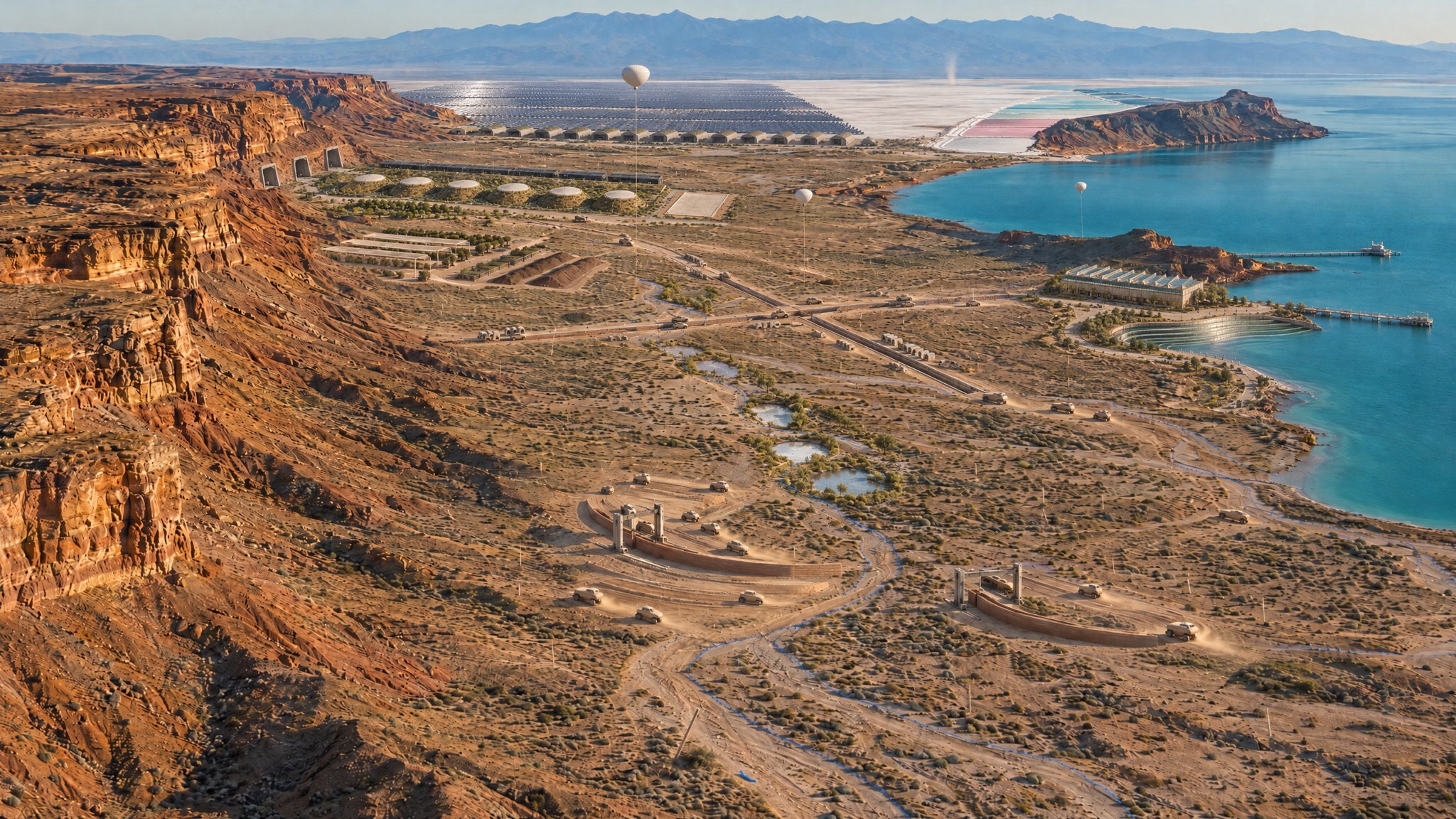
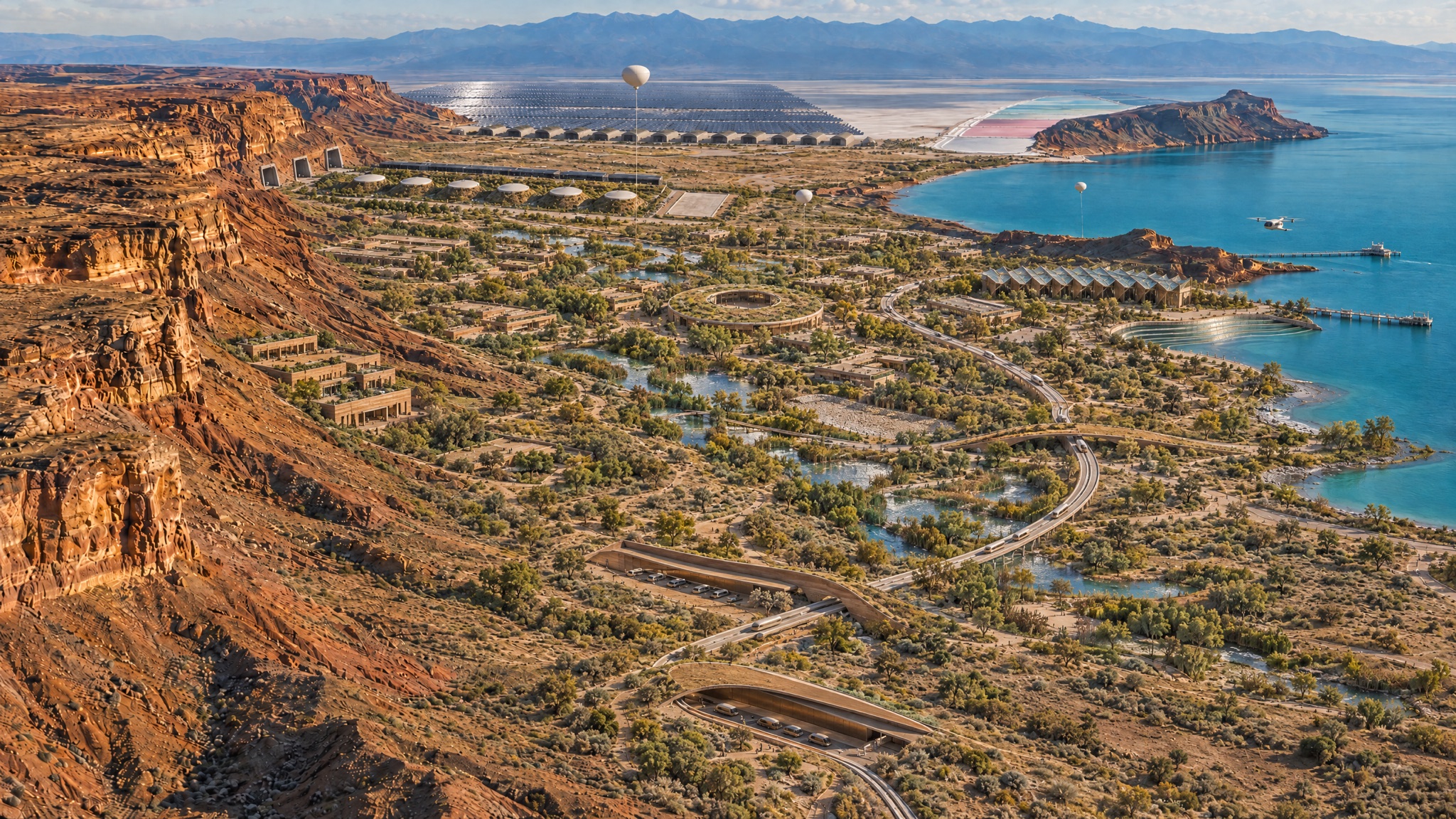
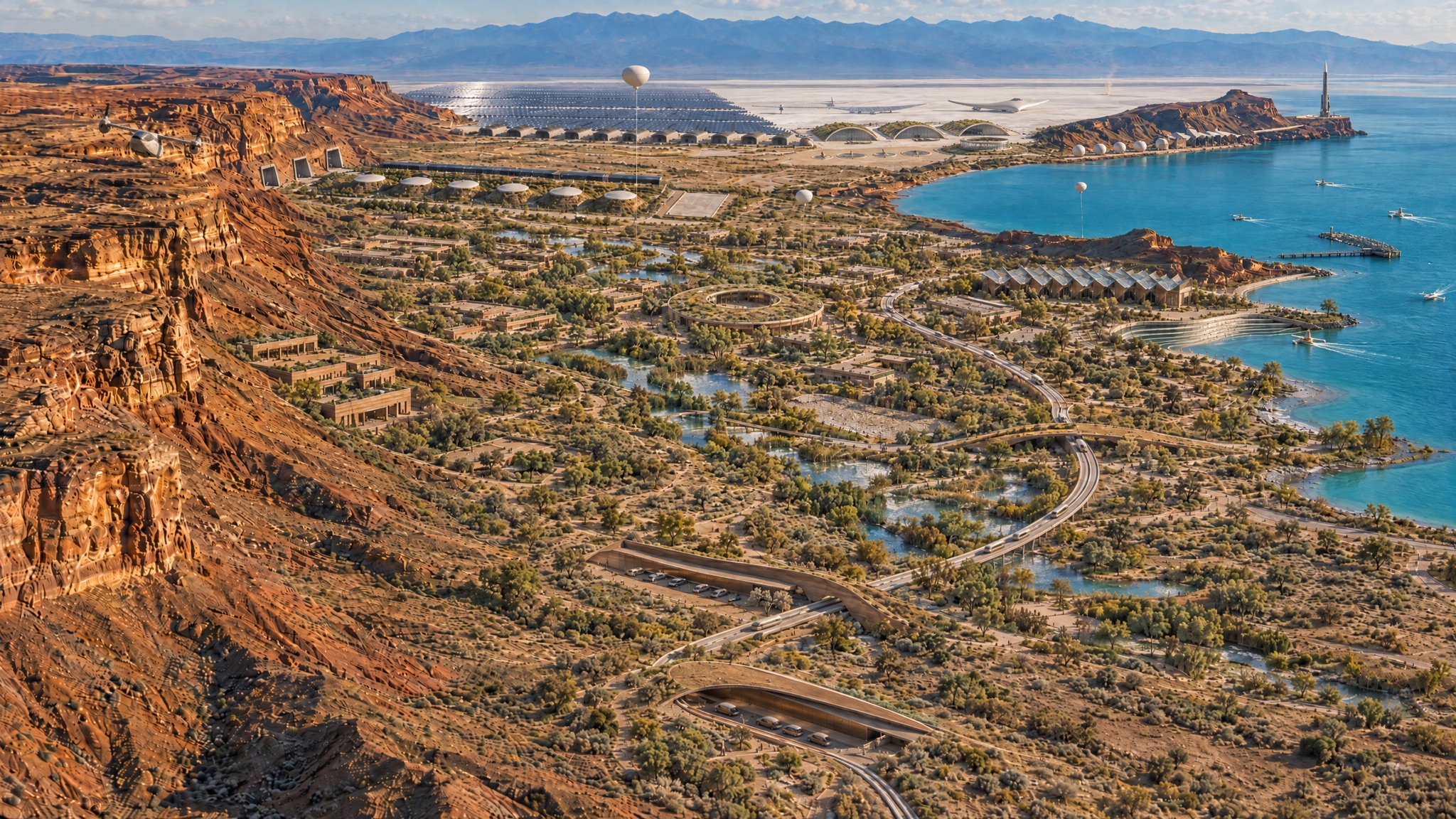
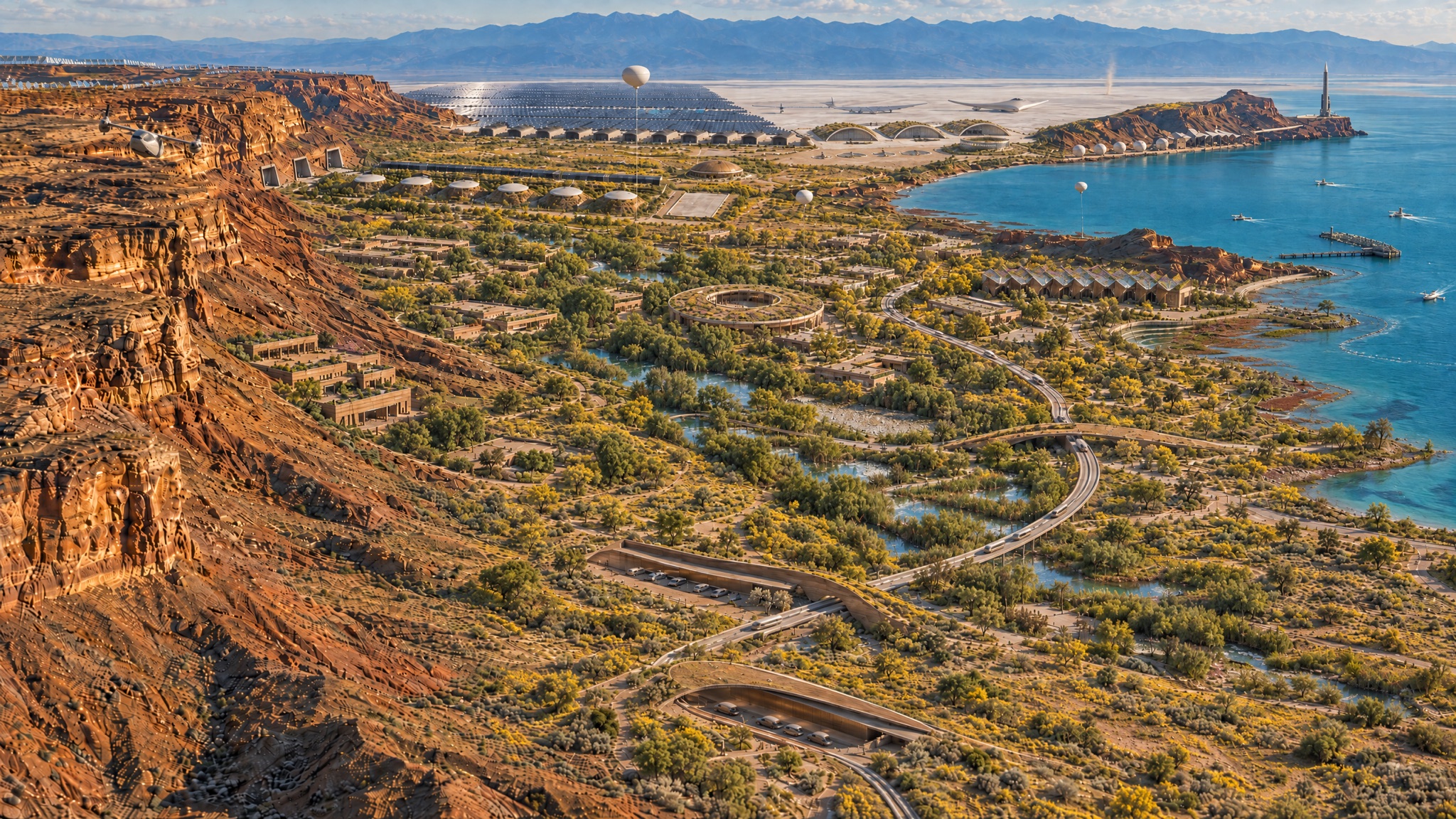
Ninety percent of the plain stays untouched in the first year. Survey stakes bend around the washes, a nursery salvages the native plants, and two gantry printers raise the first ochre wall.
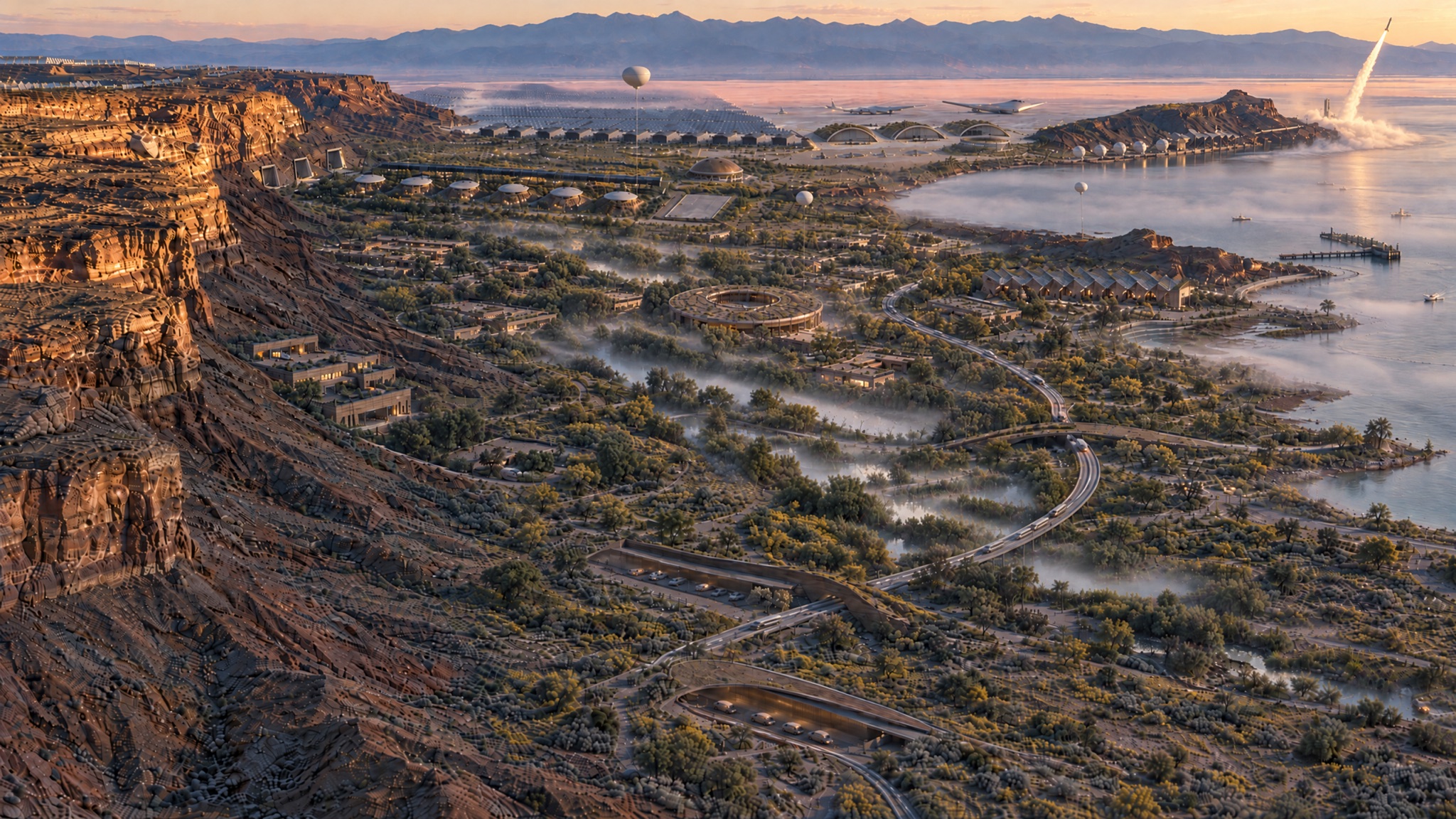
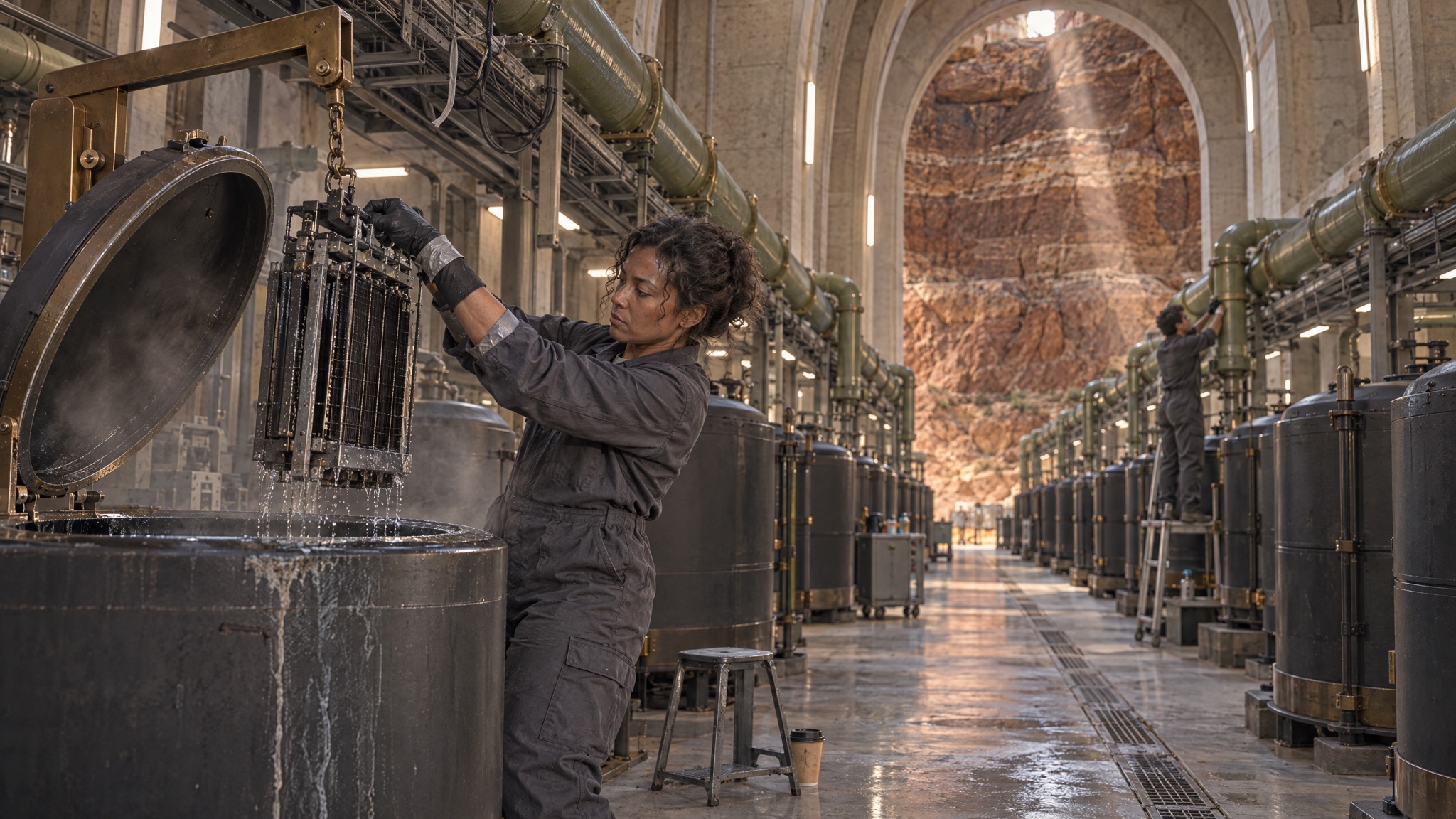
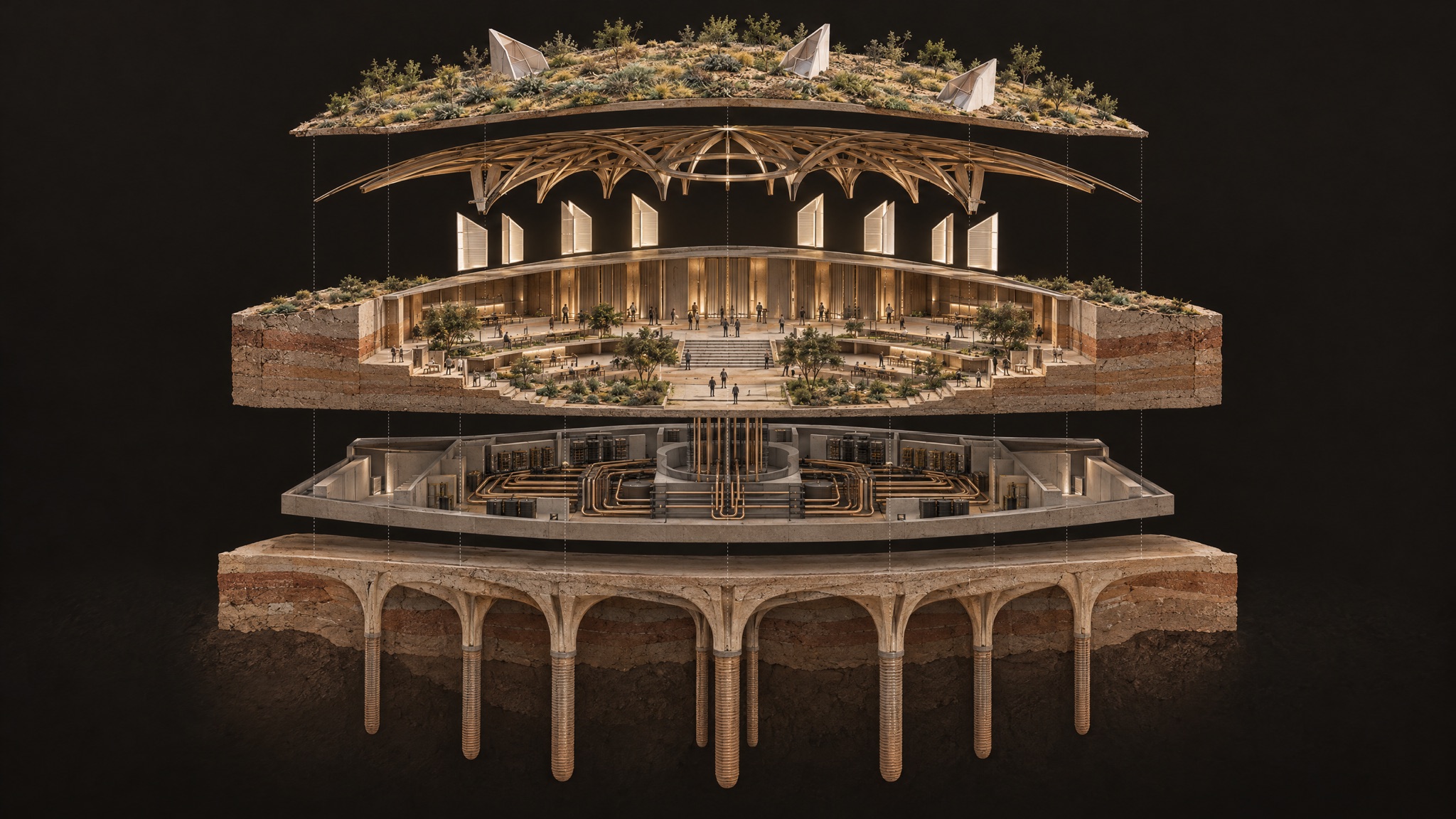
Power from three unlike sources, water from the sea and the air, and compute inside the rock. Redundancy shows as repetition: six identical reactor berms, twin utility spines.
Water draws the plan. The washes become a planted wetland chain, buildings sit on the high ground between them, and one curved transit arcade replaces every road.
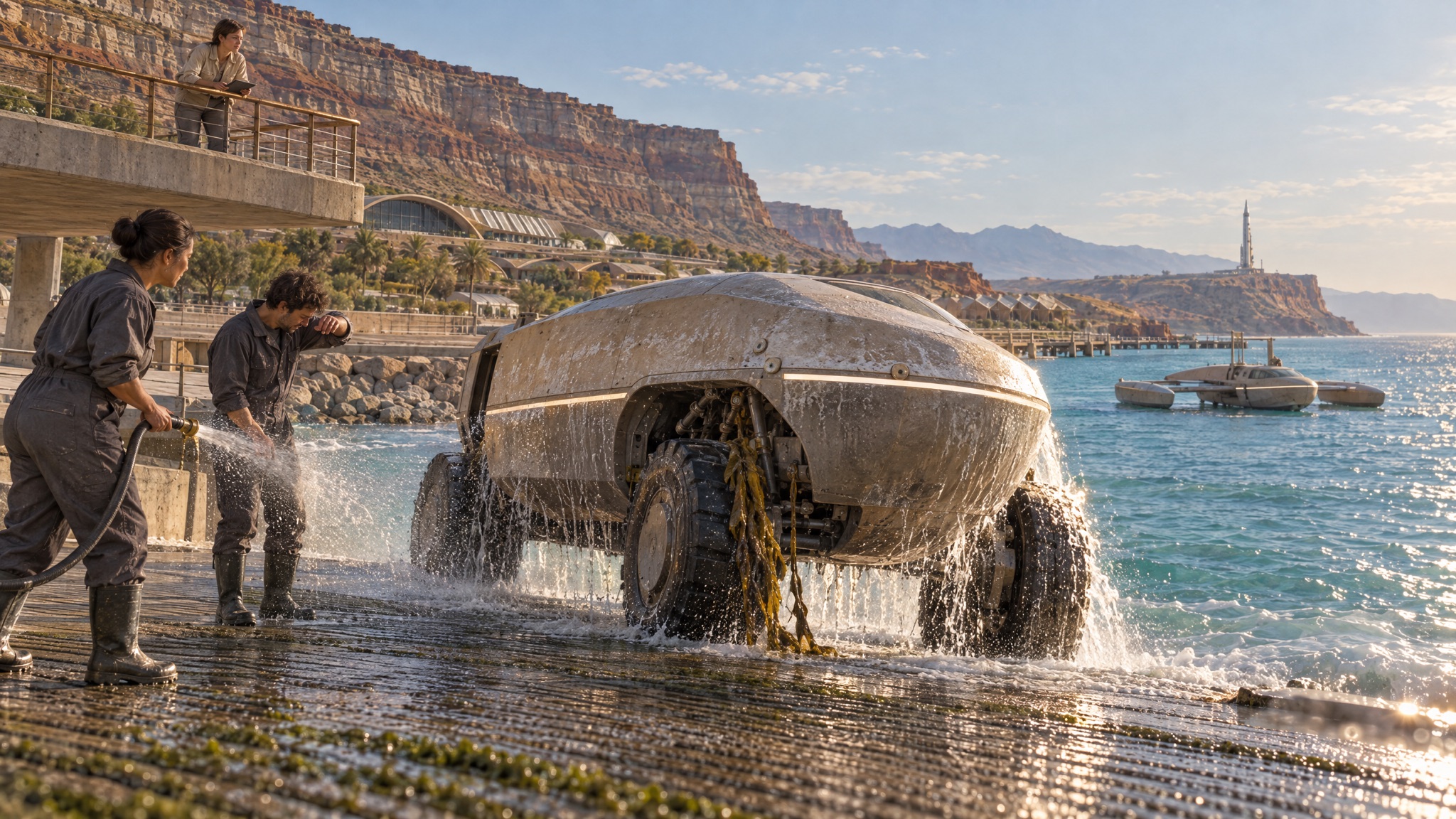
Each landform takes a domain: air on the salt flat, sea at the inner point, space on the far headland, open terrain for joint training. Capability shows by its footprint and by people testing.
A generation on, the base keeps testing by being used. When the outside grid goes dark, the basin stays lit: island mode, calm and continuous.
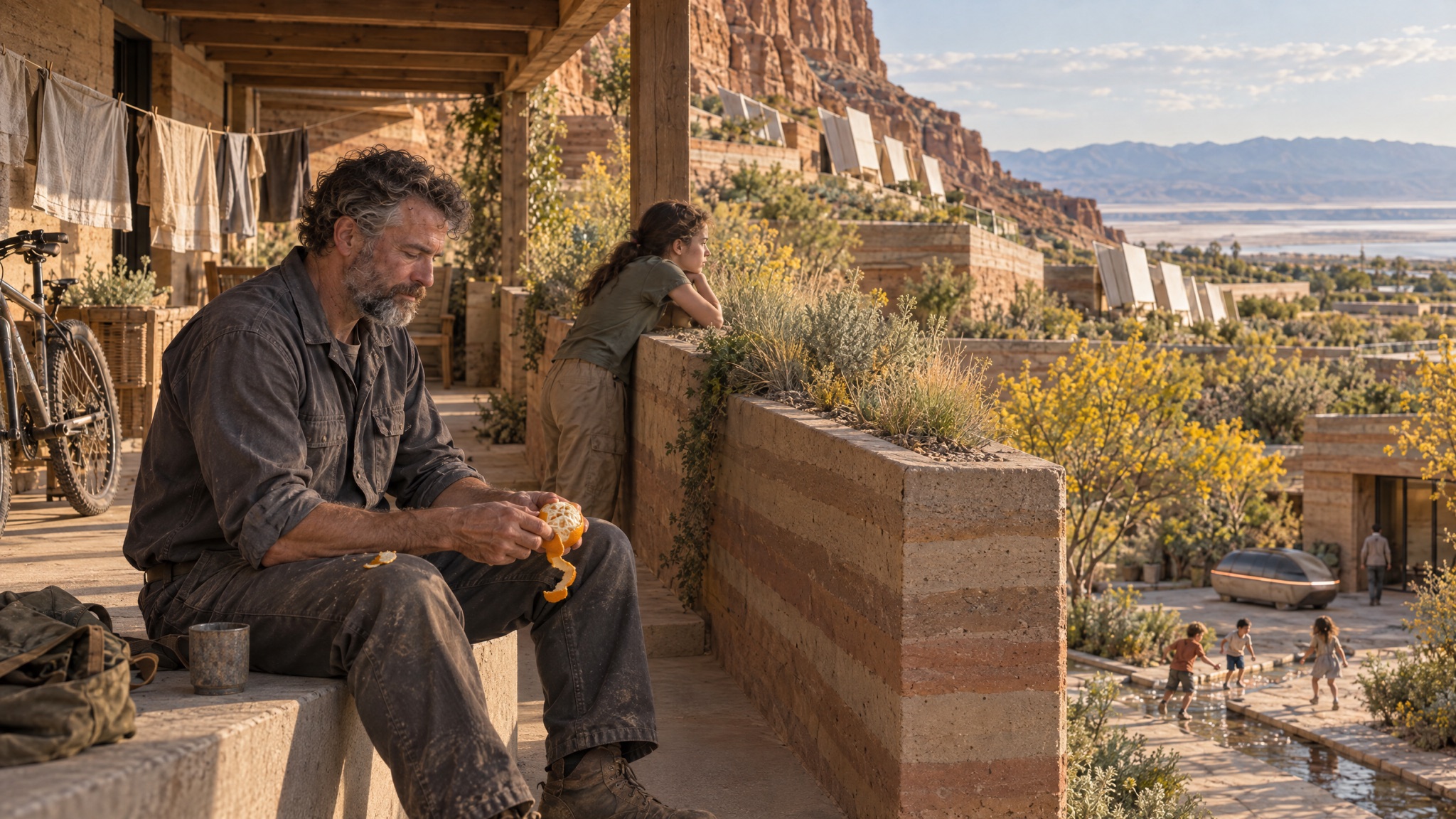
On the last morning the people who grew it watch a vehicle leave the headland. The basin is one node in a network, and the first of many.
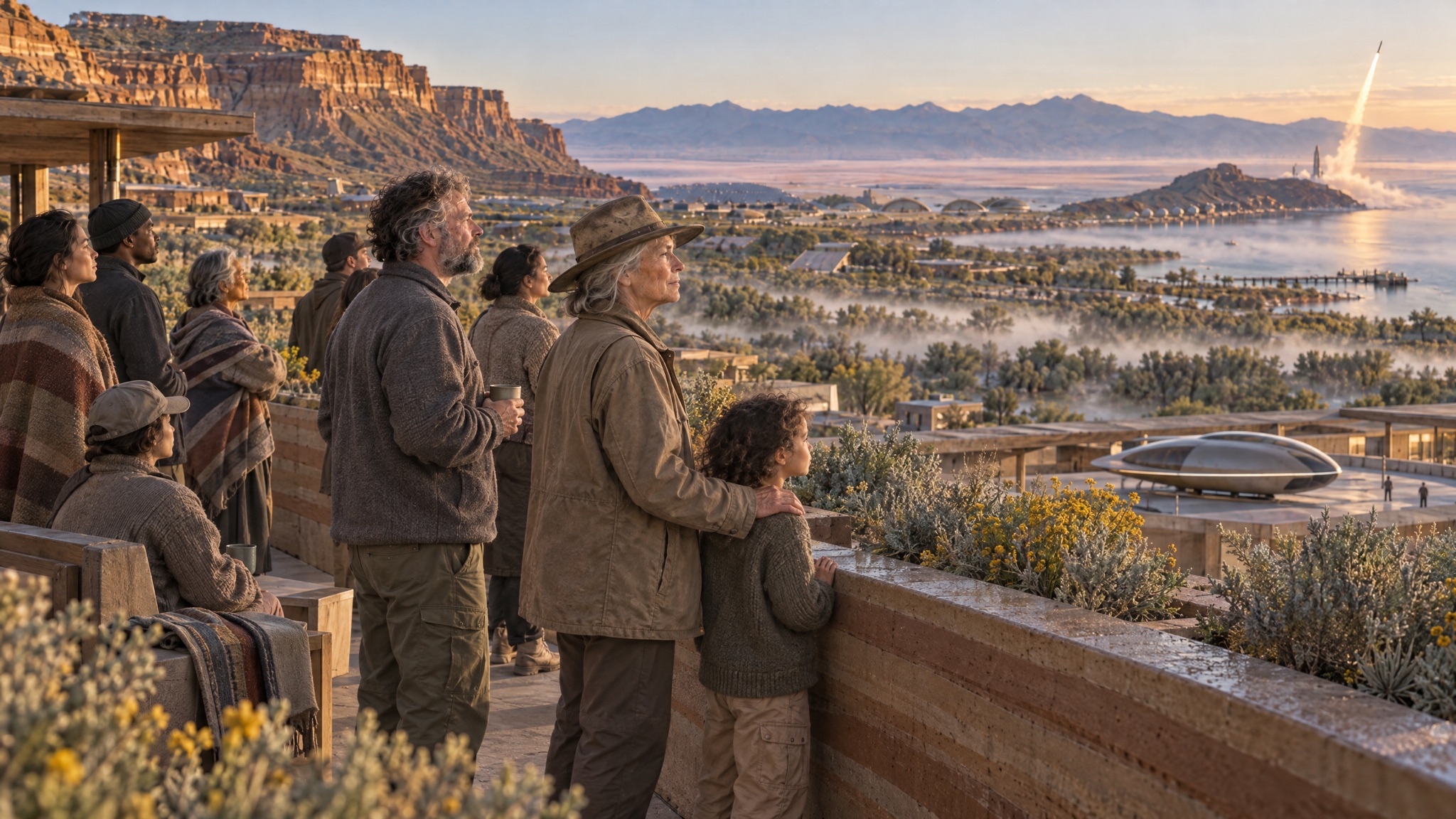
2026
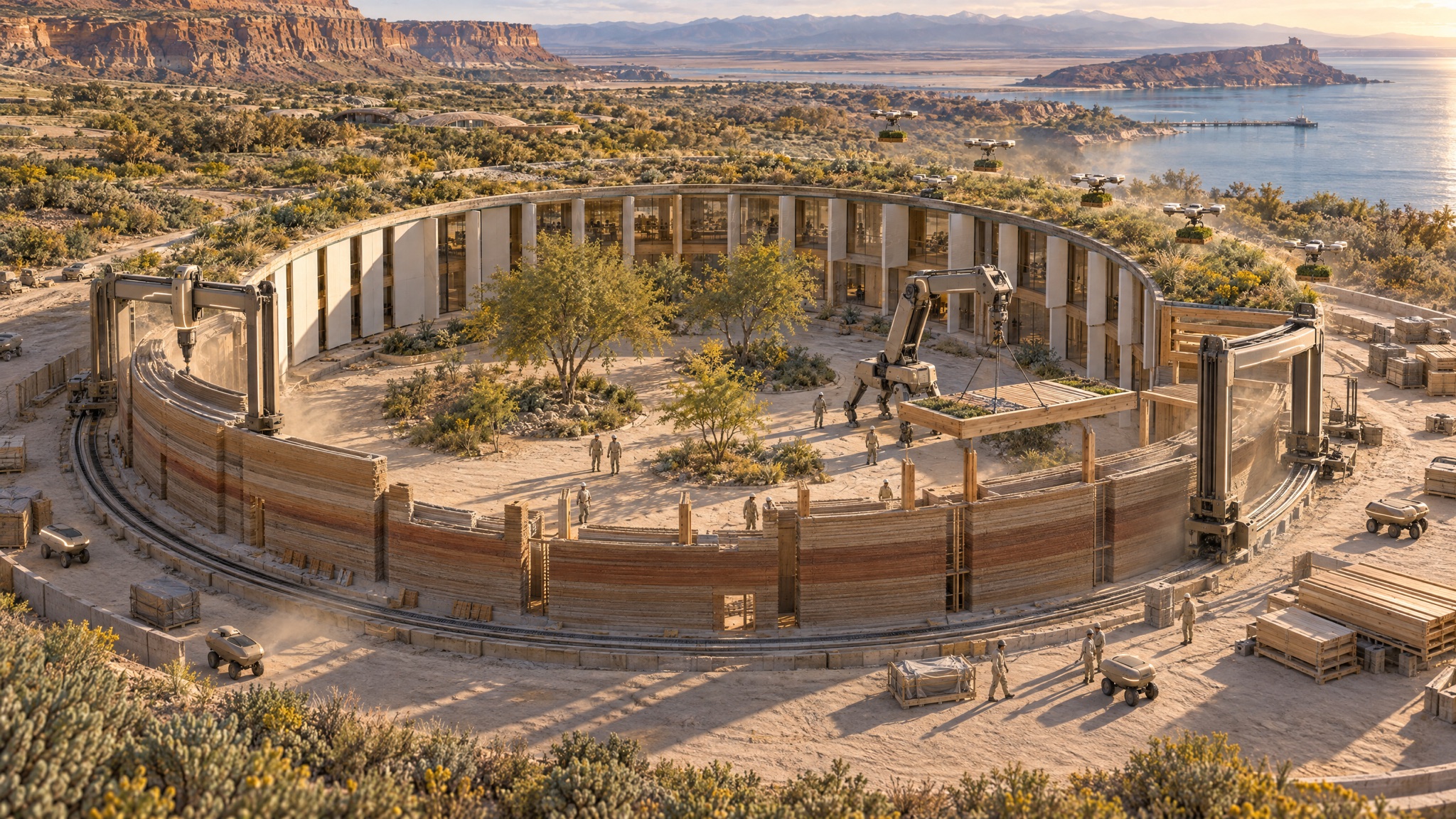
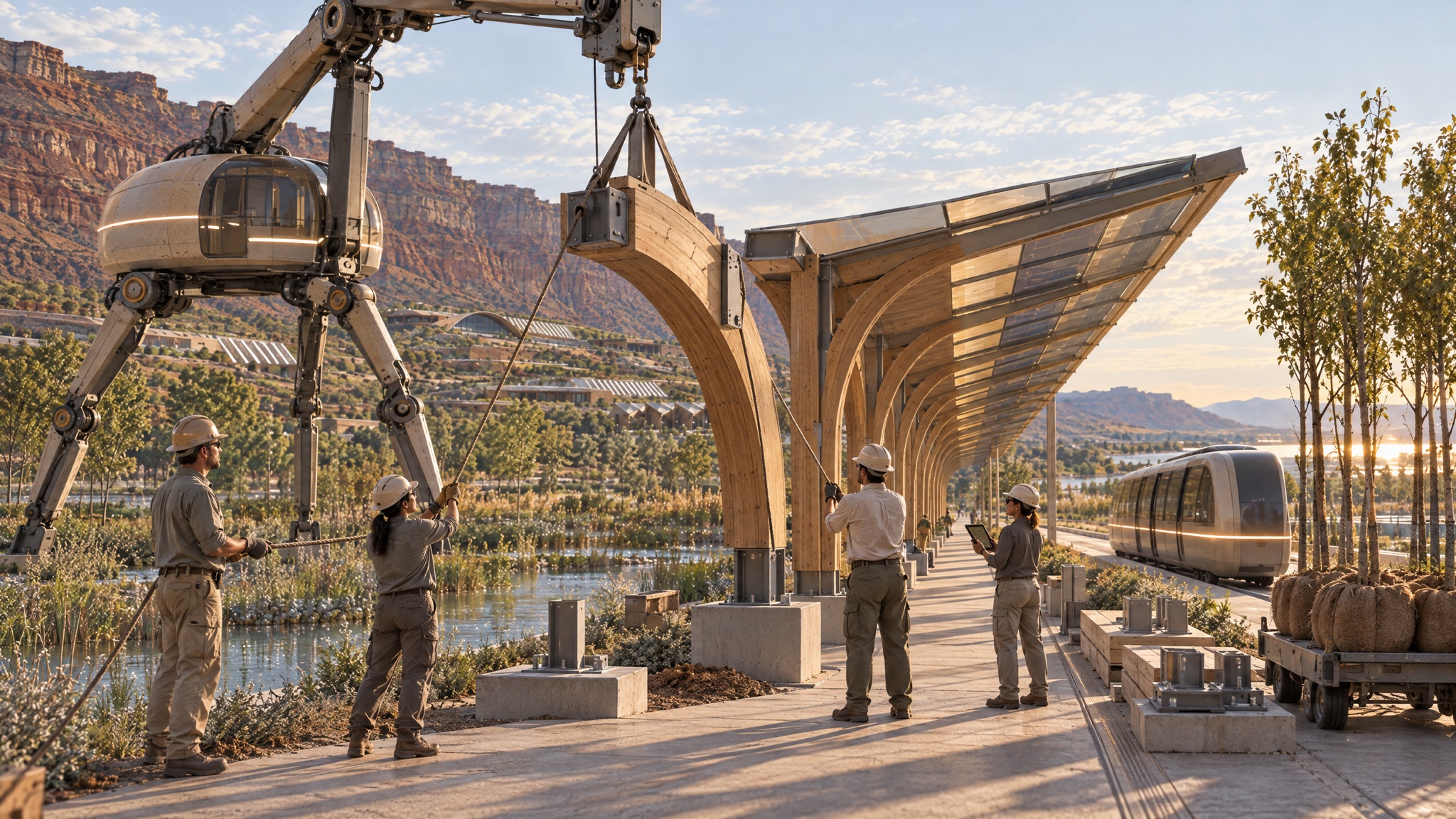
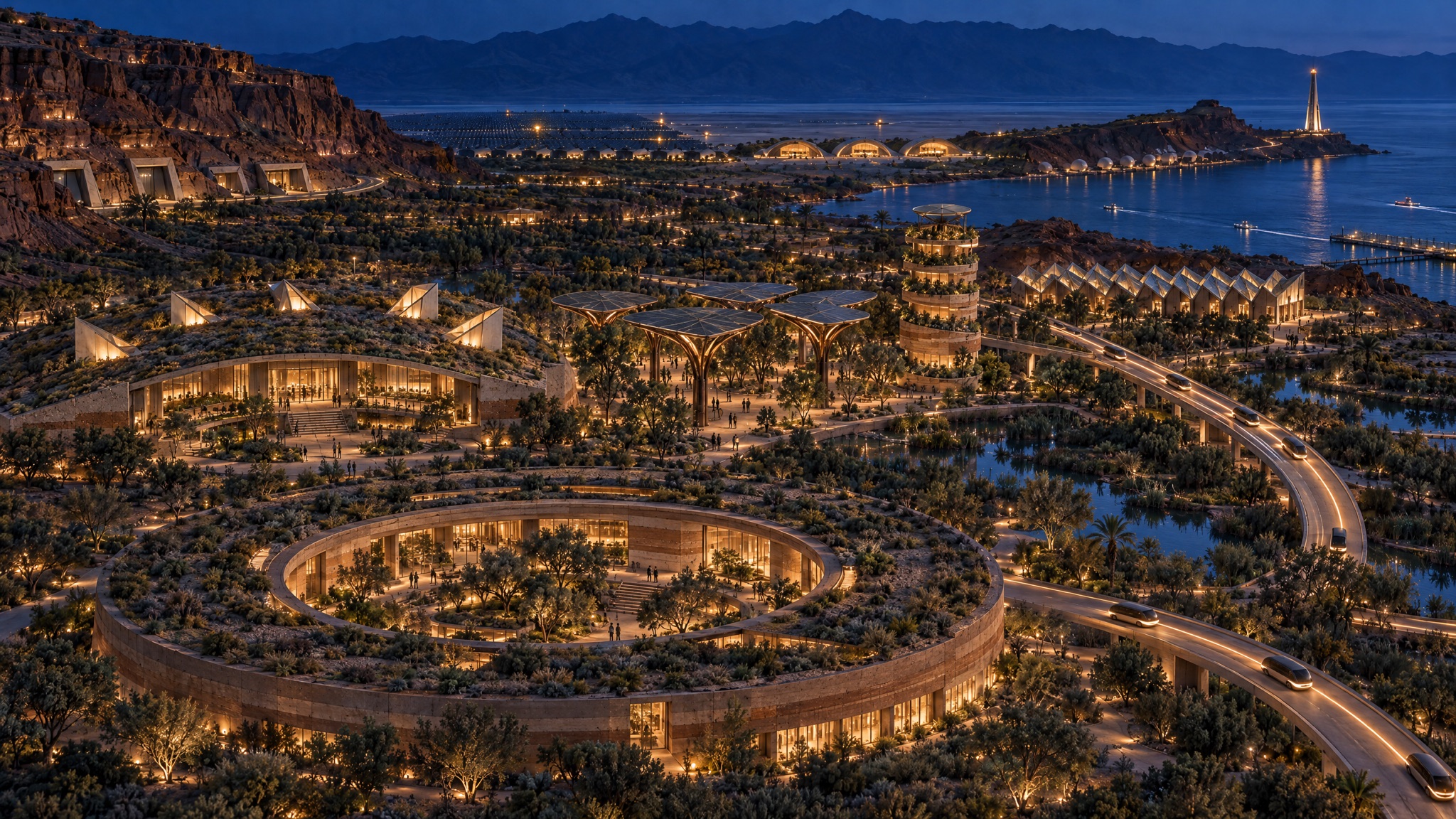
Nothing arrives finished. Printers lay walls from the basin's own soil, drones plant the roofs, cranes walk the arcade into place a module at a time, and each building is lived in while the next one rises beside it.
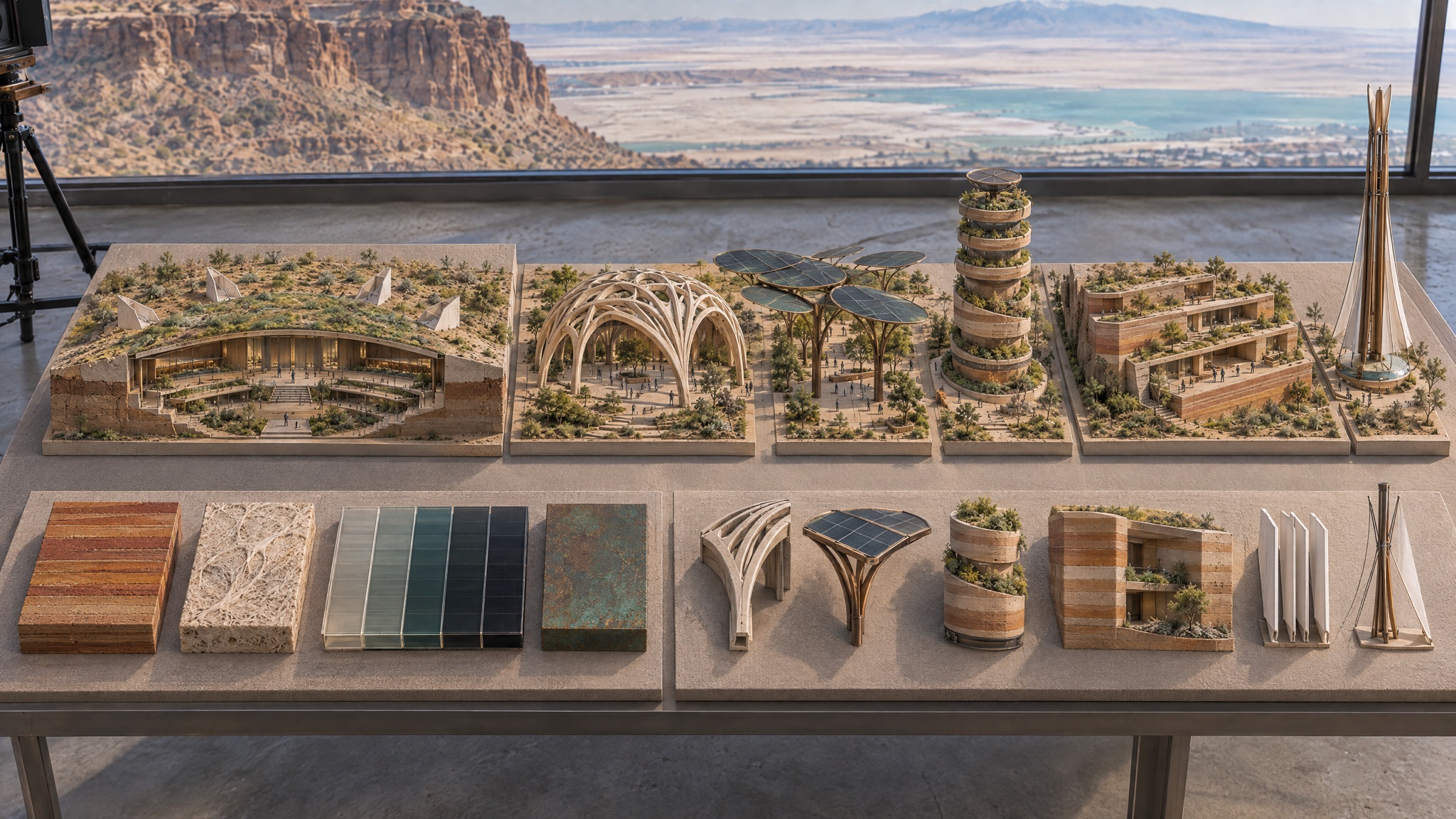
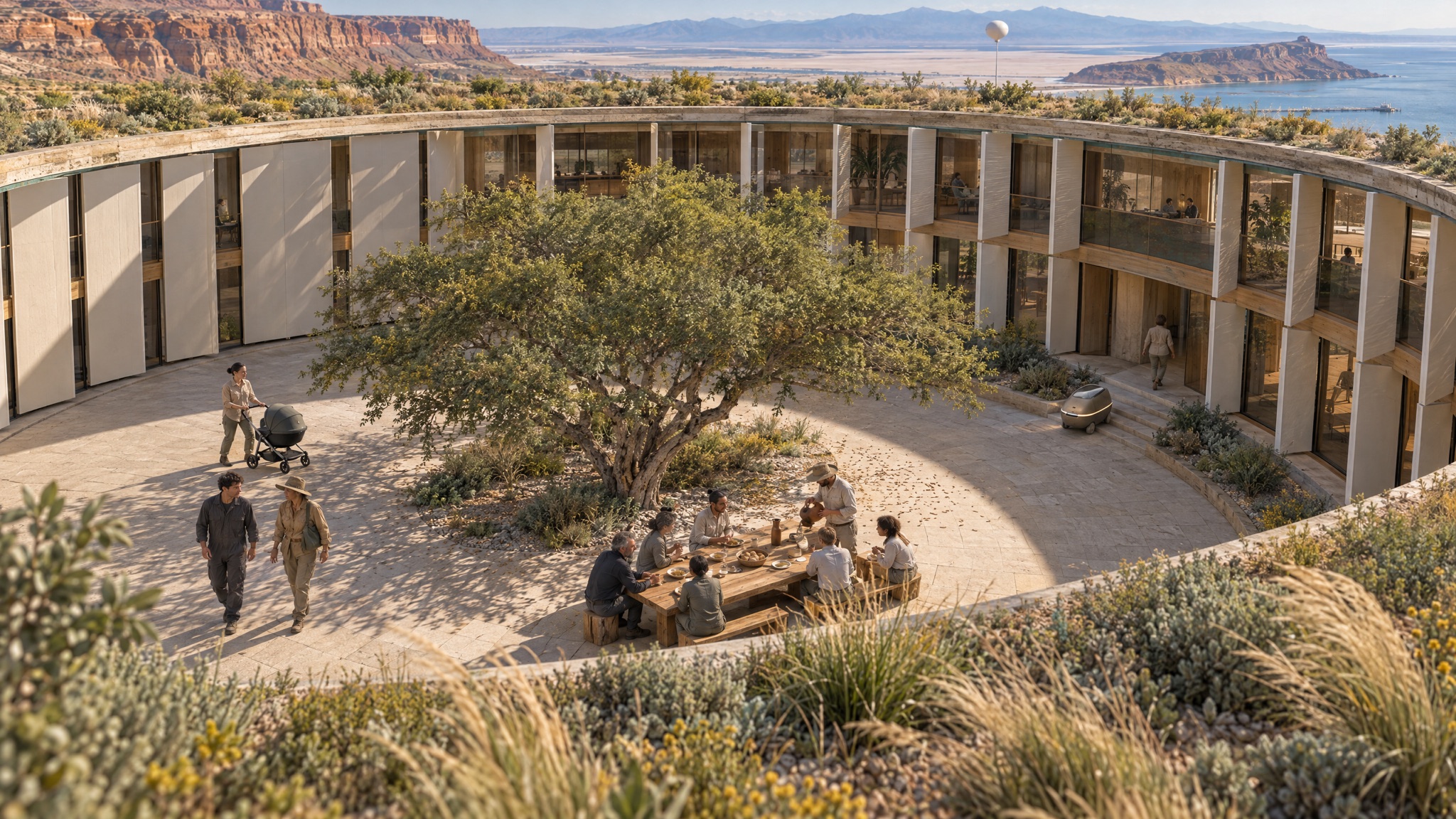
Buildings here do not sit on the land; they grow from it. Walls are printed from site soil in layers banded like the cliffs, shells are grown from mycelium composite, roofs carry native grasses, and solar trees shade the plazas. Nothing on the plain rises above three storeys, so the mesa stays the tallest thing in view.
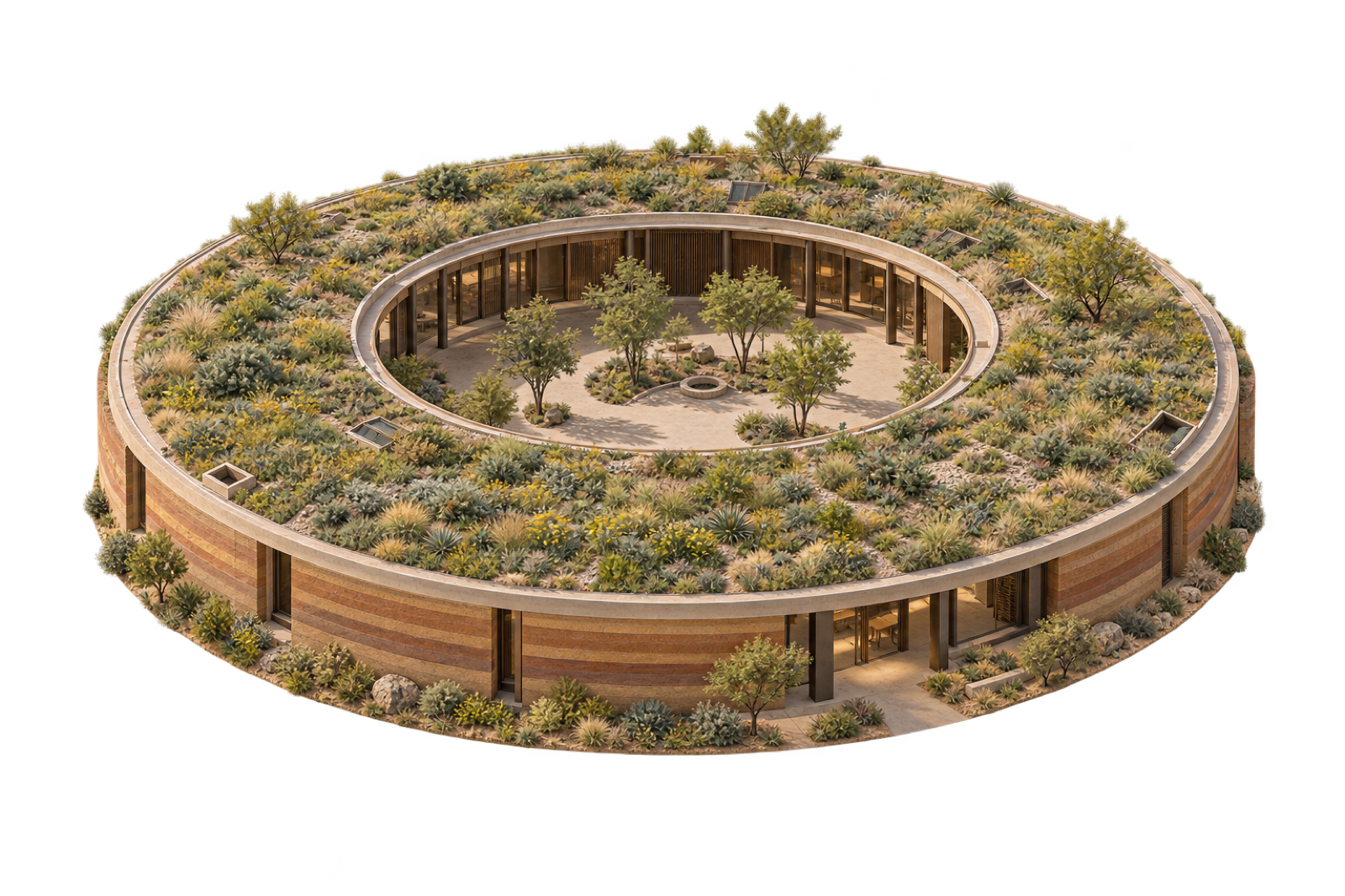
Every building and machine is drawn before it is printed. The drawings are as much a part of the vision as the pictures.
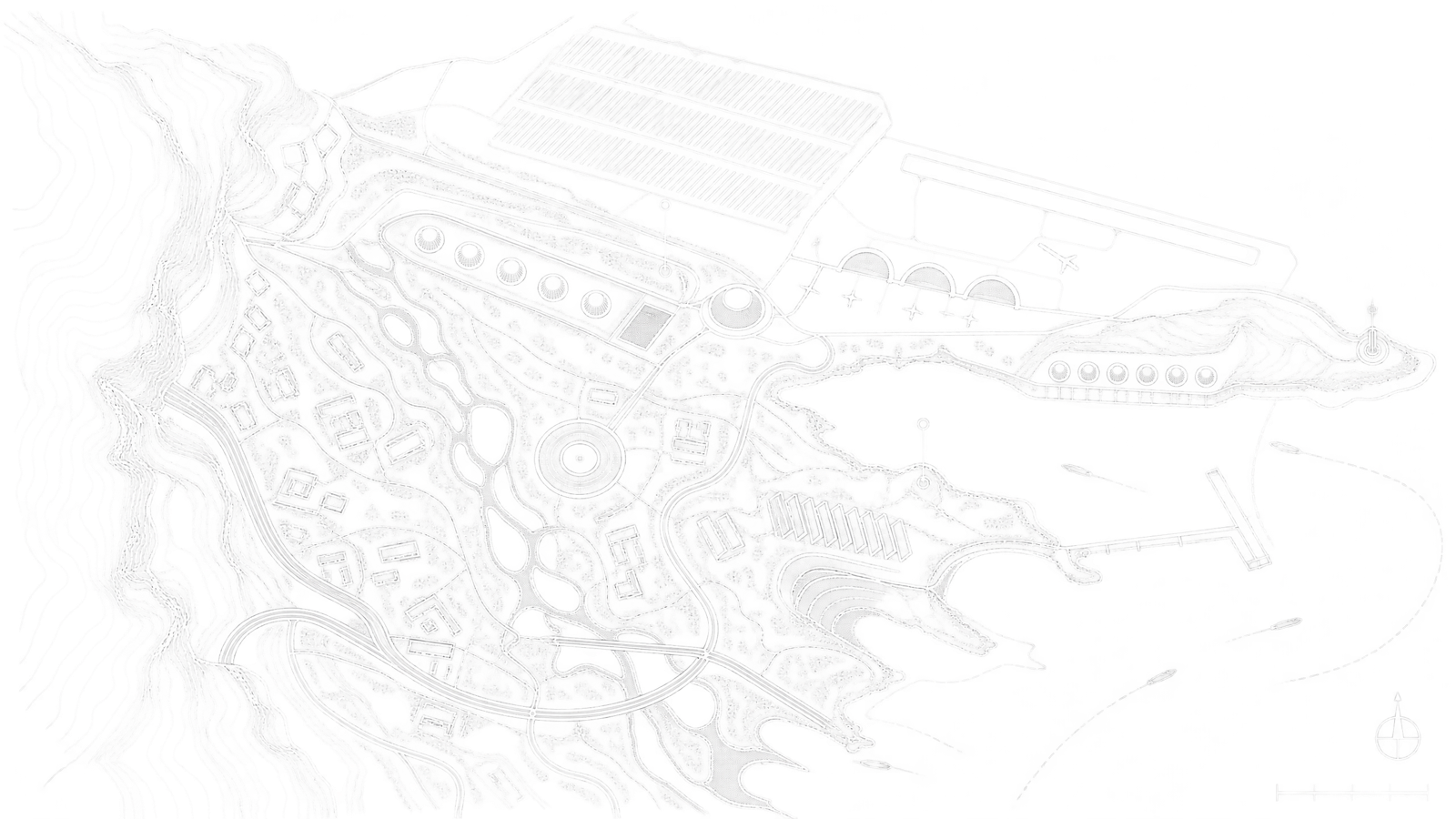
Drag to compare the drawing with the built place
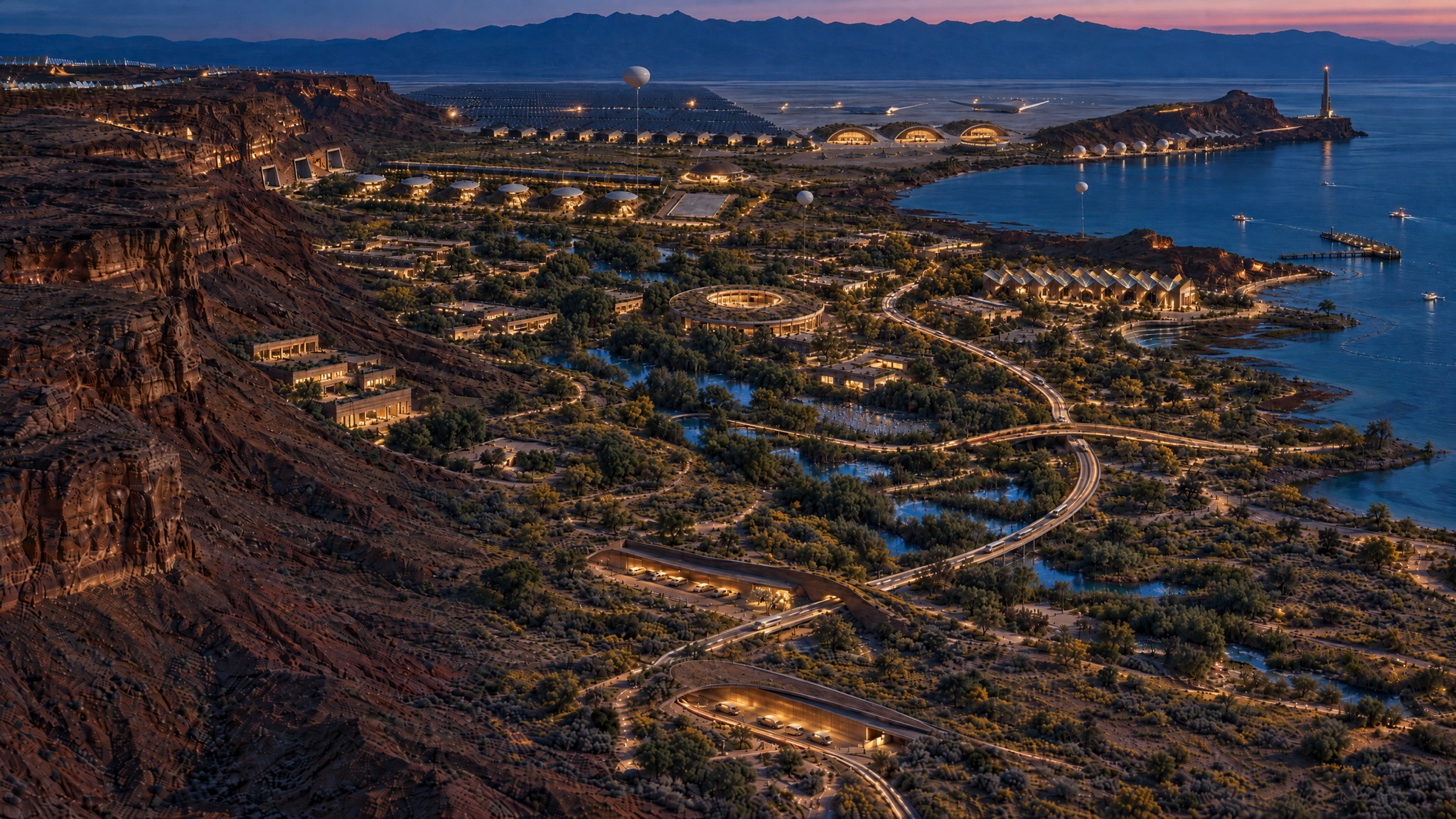
One unmarked family of quiet machines builds, carries and tests: river-stone shells in sand ceramic, one warm lightline each, electric and mostly uncrewed.
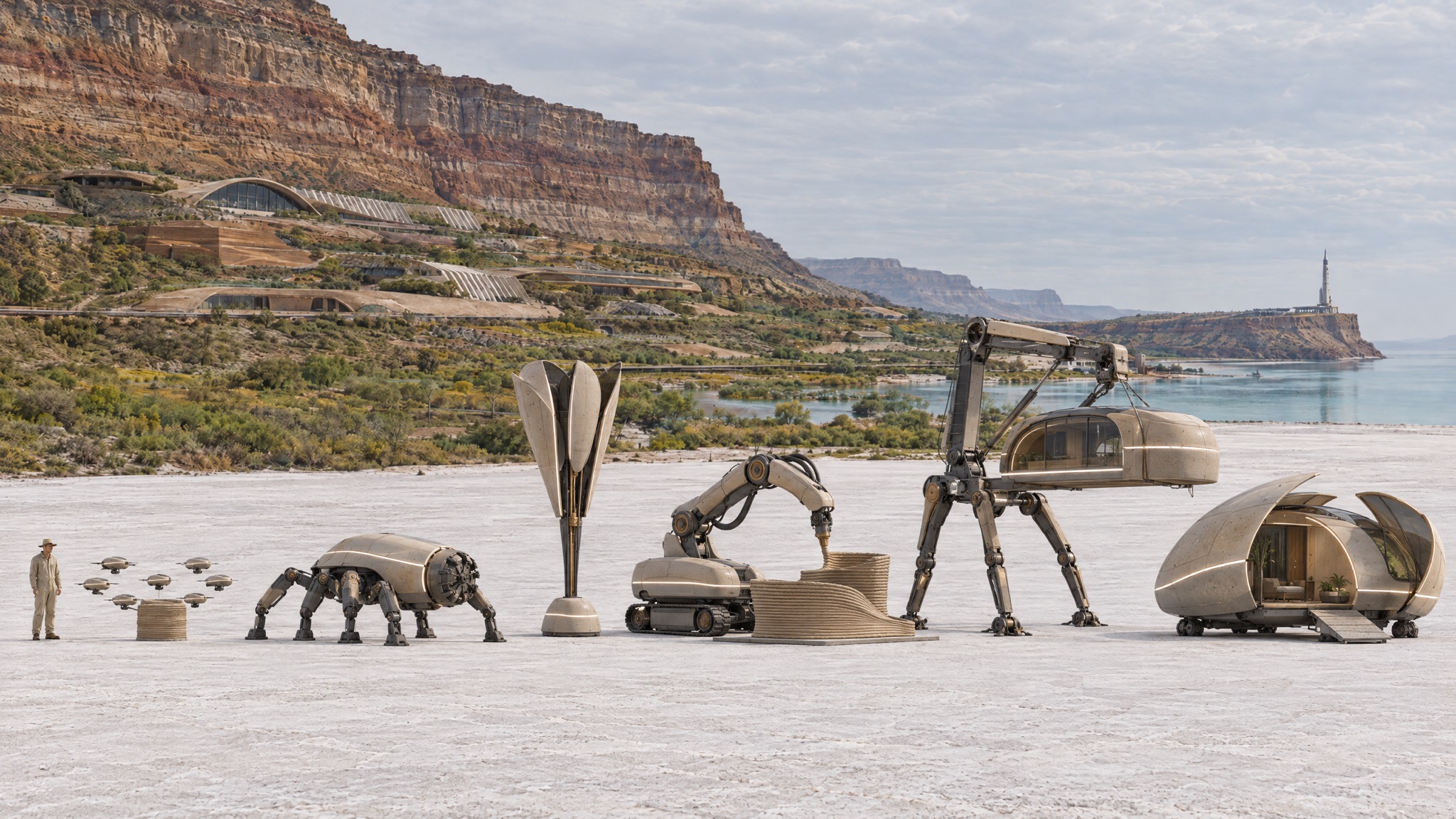
Six disciplines designed the world before a single picture was made. Their work became design sheets, and every frame was built from them, so a building, a machine or a face looks the same wherever it appears.
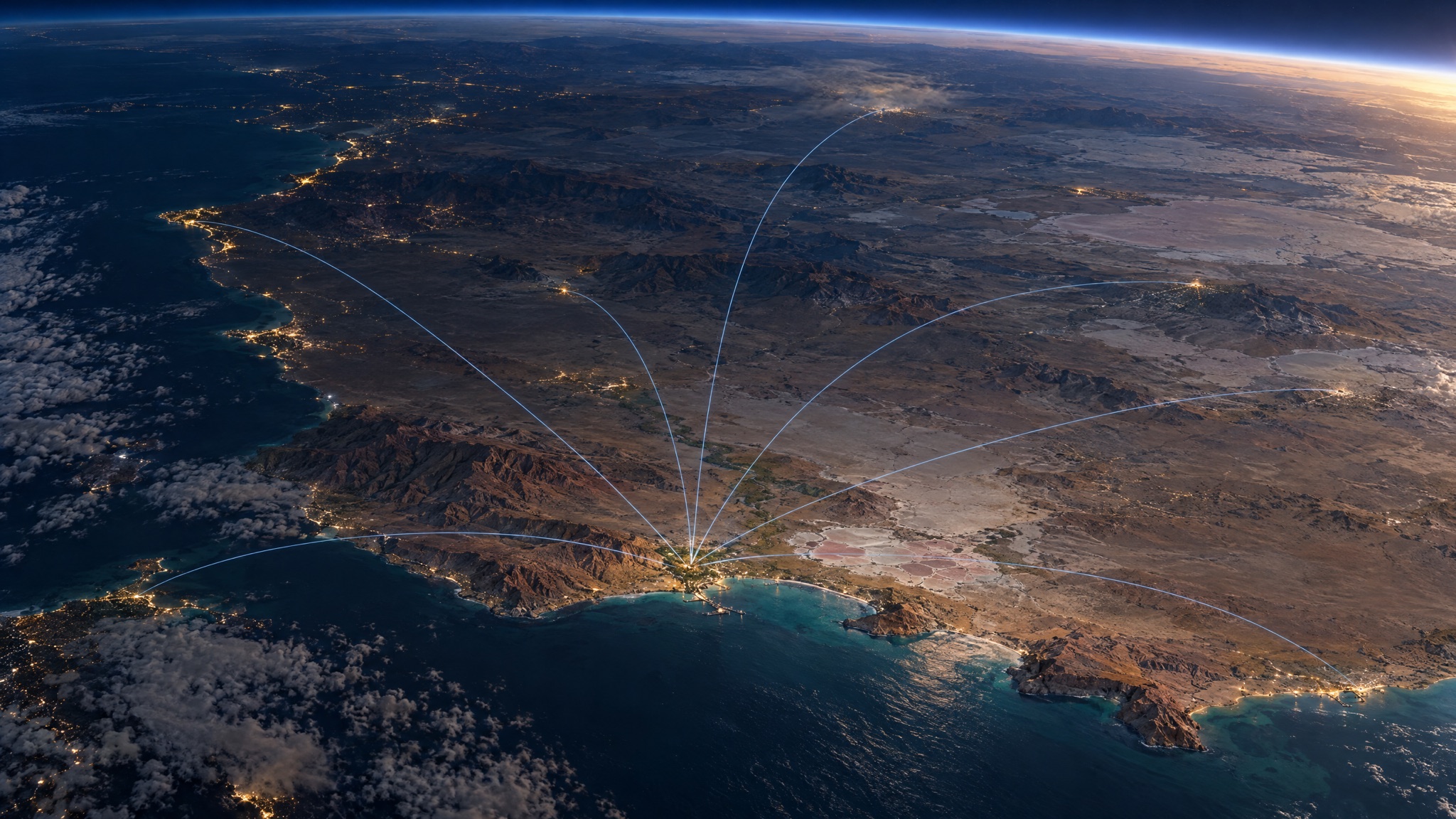
Each basin is self-sufficient, and none is alone. Installations share what they learn, test for each other and hold each other up when one goes quiet.
The future of installations starts now.
Watch it grow again