The canvas
Most installations are dropped onto land and spend a century fighting its water, heat and dust. This one starts by studying the ground it will become.
Year2026
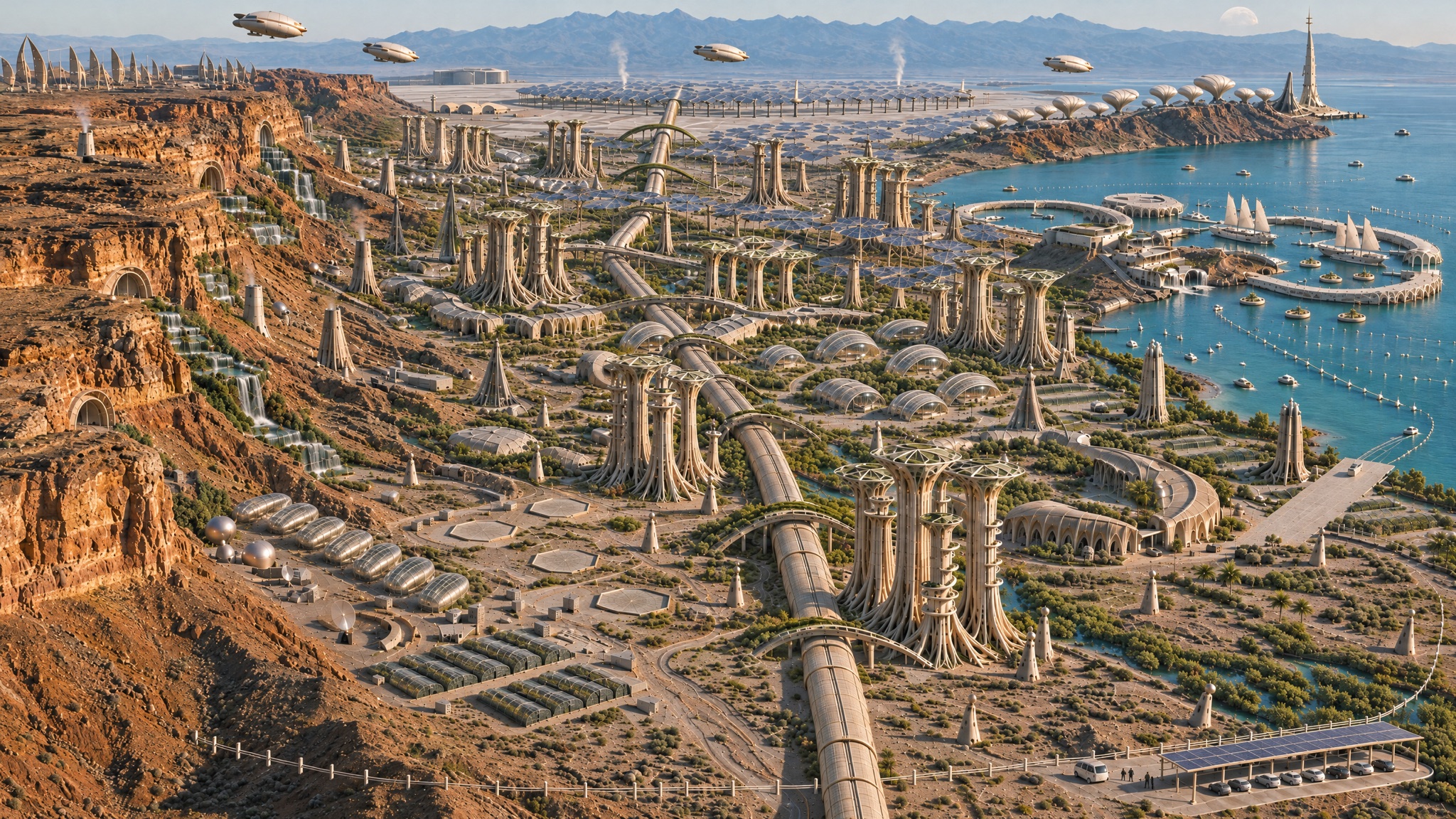
Rooted here. Ready for anything.
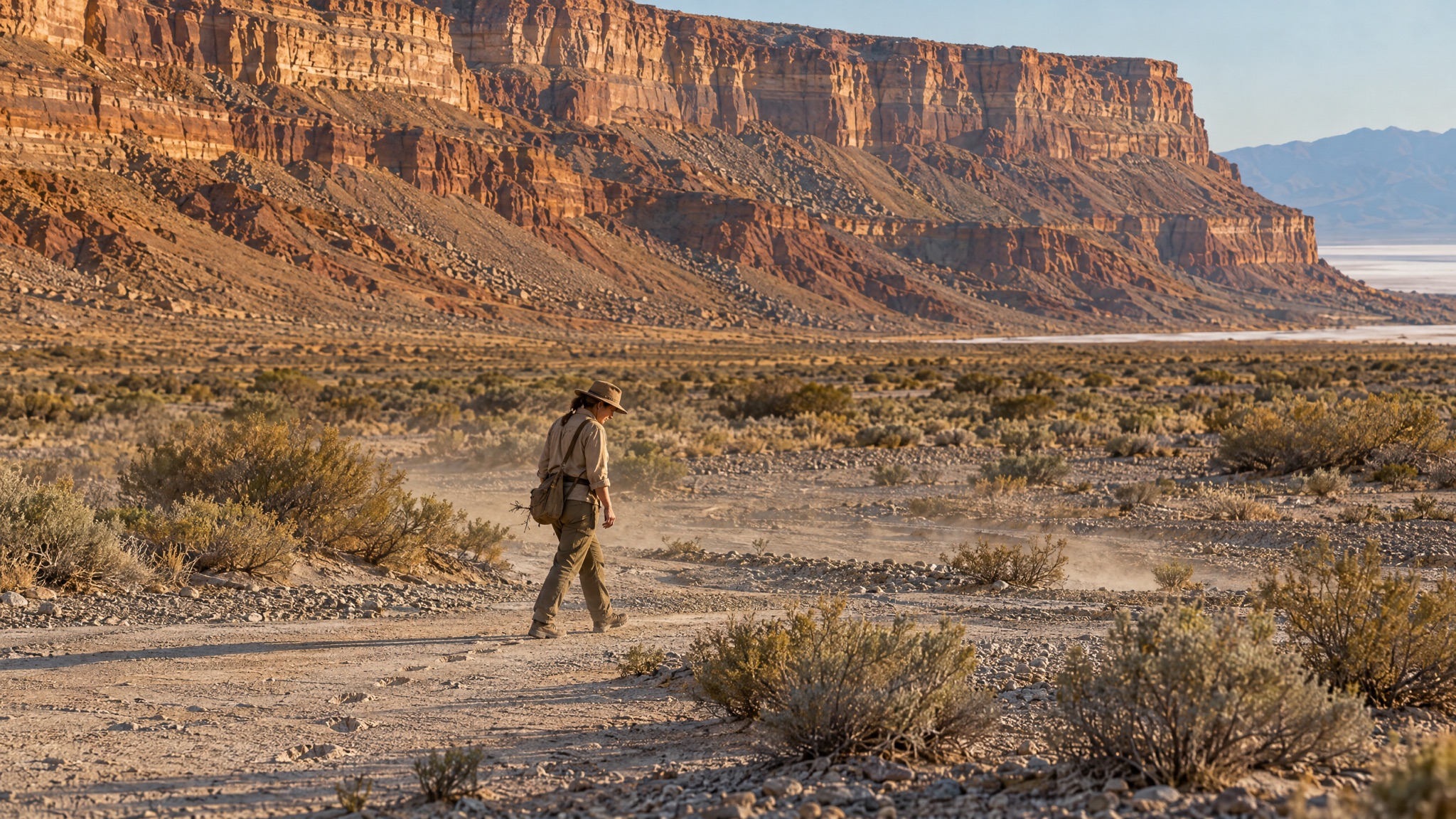
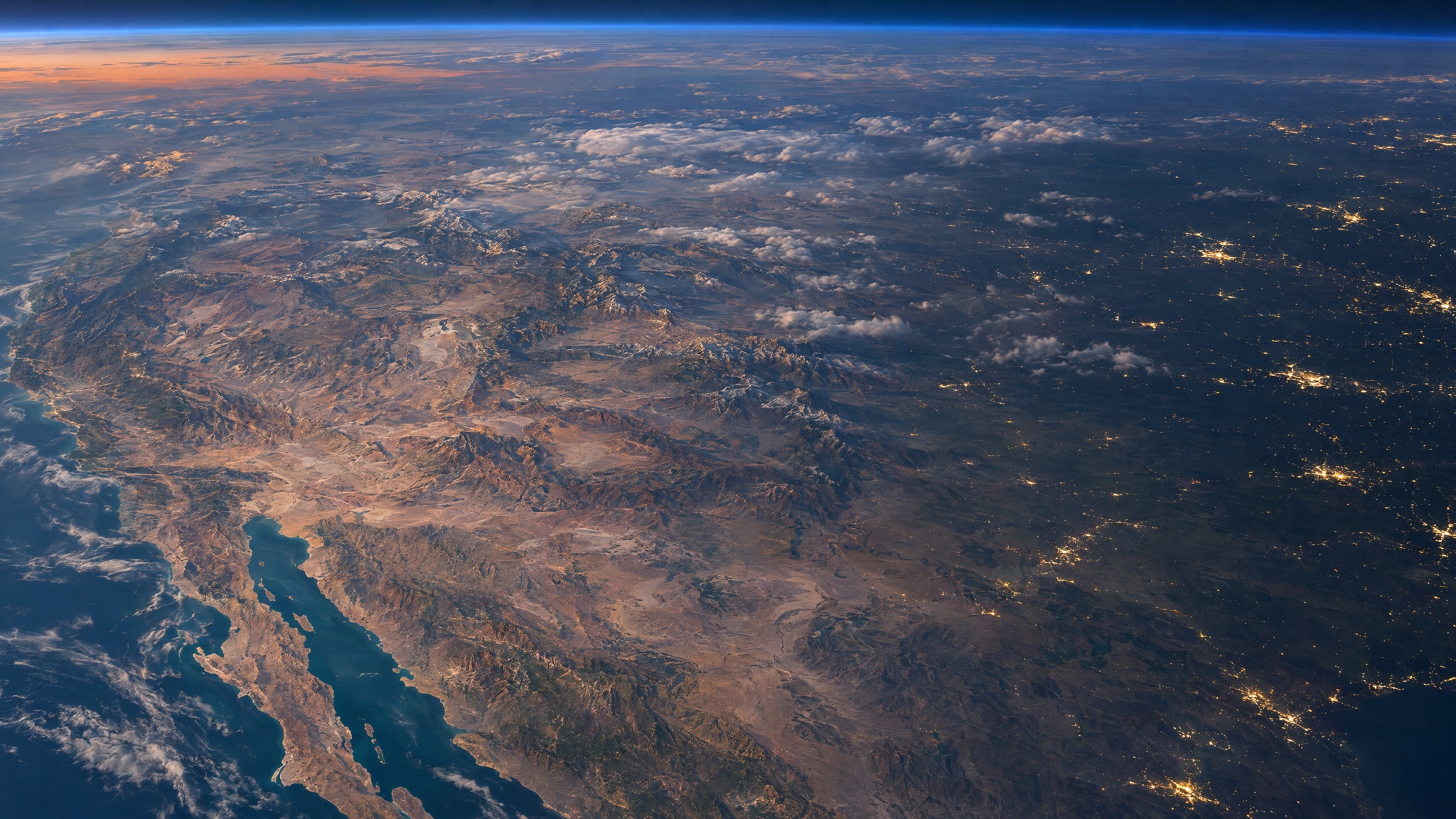
2026. One basin, one fixed camera. Nothing built yet.
Move across the basin to look through to 2075
Most installations are dropped onto land and spend a century fighting its water, heat and dust, while relying on a grid, a pipeline and a highway they don't control. TAPROOT starts the other way round. It spends a year reading one coastal basin, keeps the washes that drain it, and prints its first wall from the ground it stands on. Two rules shape everything after: make what you need here, and use what you test.
2026
Most installations are dropped onto land and spend a century fighting its water, heat and dust. This one starts by studying the ground it will become.
For a year, machines map how water, wind and heat move through the basin. The washes that flood are kept open and everything else is placed around them. A trailer microreactor means the camp depends on nothing outside it from the first day.
Before anyone moves in, the base can sustain itself: power from the salt flat and the reactor, compute protected in rock, and fresh water made from the sea with the compute's waste heat. An outage or a contaminated supply outside the fence changes nothing inside it.
The base gets an edge. Cars stop at a quiet sensor perimeter and autonomous pods take over inside, so it needs a fraction of the roads and parking of a conventional installation. The airfield and the first launch pad go in, and the salt flat starts producing minerals.
Uncrewed aircraft fly from the salt flat, amphibious craft run the land-to-water lane and launches go weekly. Every system tested here is also used here every day, so its failures show up in ordinary life long before they reach anywhere else.
Towers are grown in place from the basin's own mineral, power arrives from orbit day and night, and the base fires its own precision parts. It can lose every outside supply line and keep running.
The longest bet: a tether to orbit turns a launch into an electricity bill. Meanwhile the perimeter, airfield and ranges keep testing whatever comes next, because the base never stops being a proving ground.
Fifty years on, the installation is quiet, green and largely maintains itself. Its template has been copied site by site across the country and, finally, to the Moon.
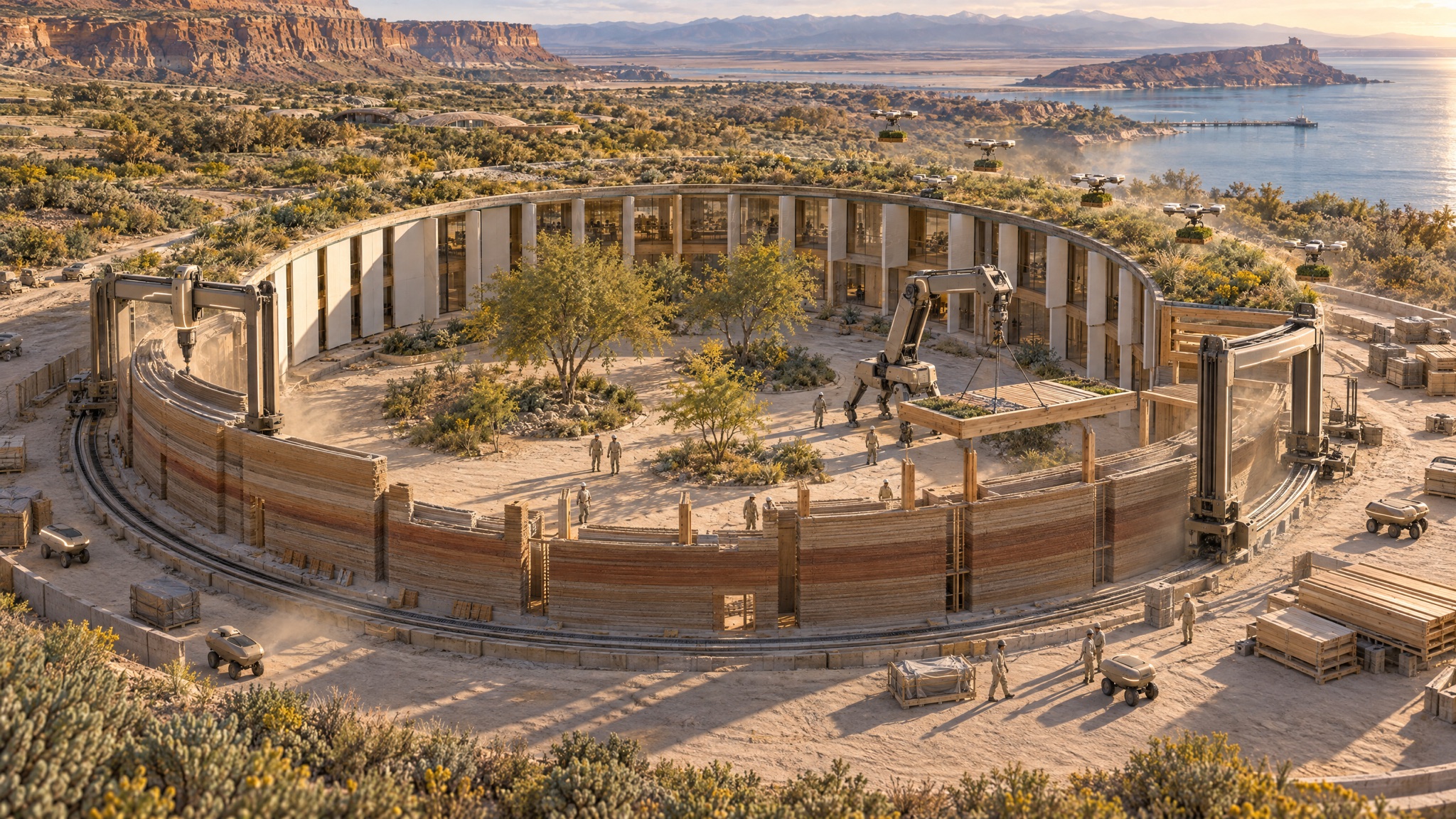
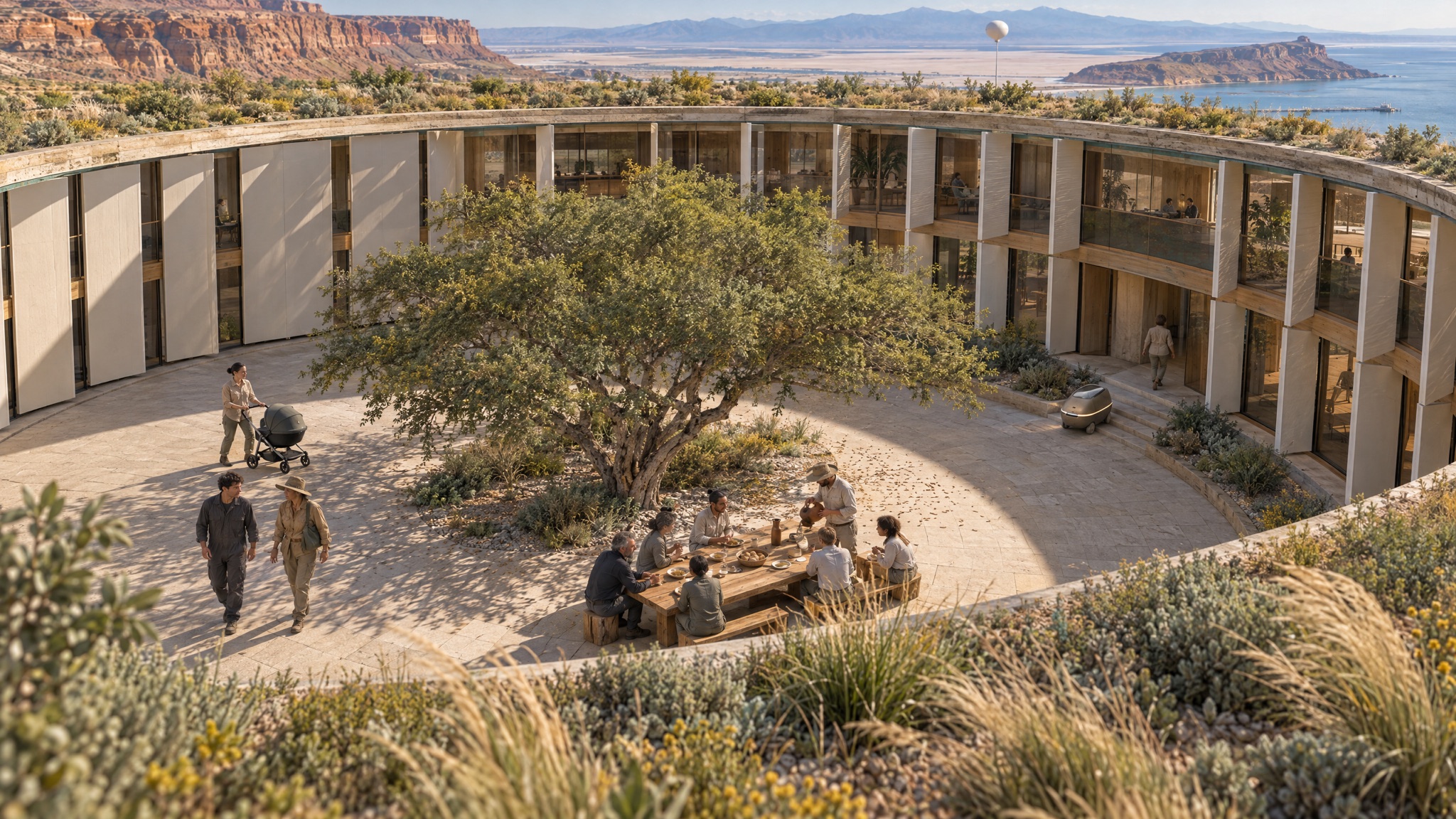
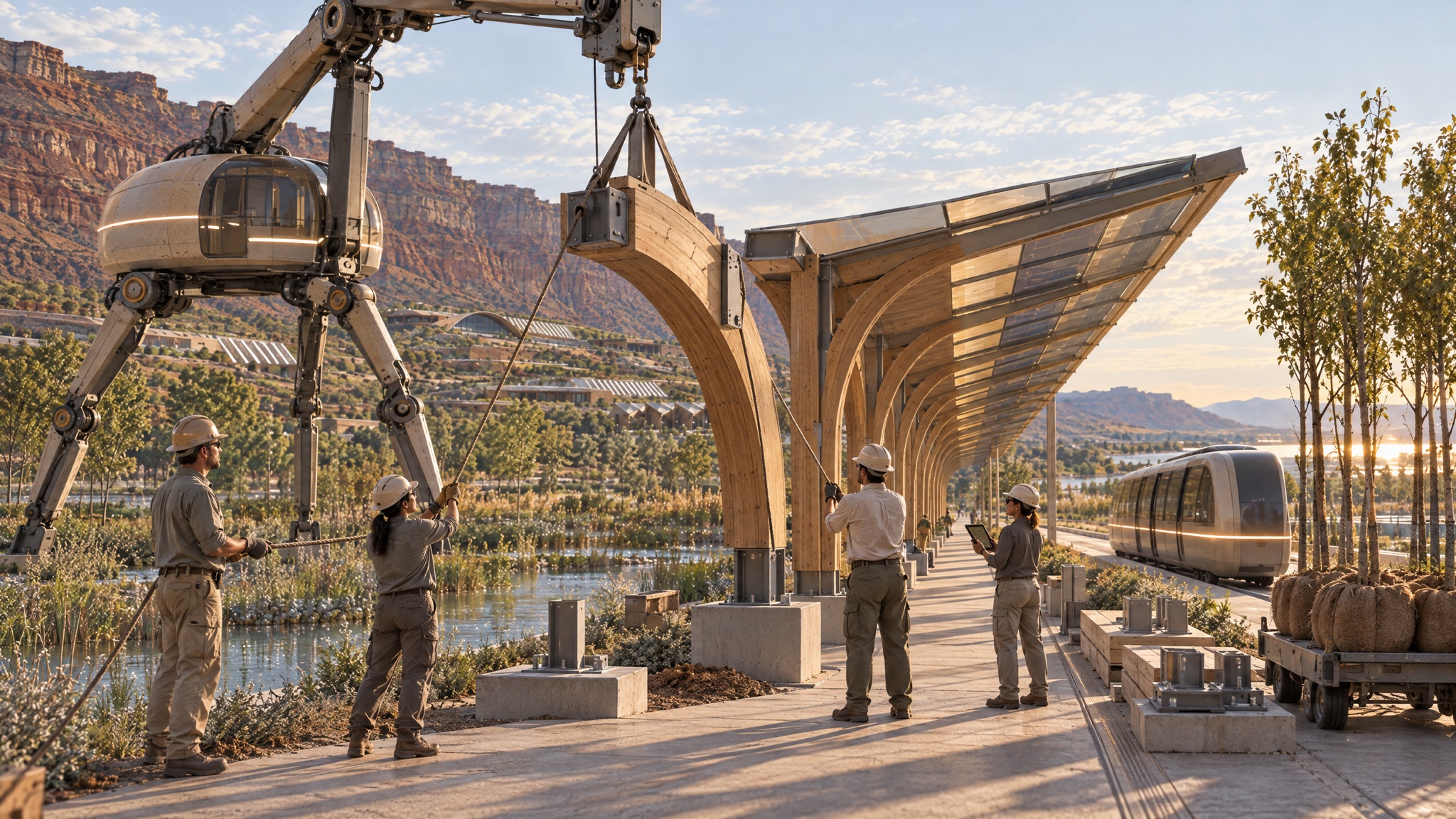
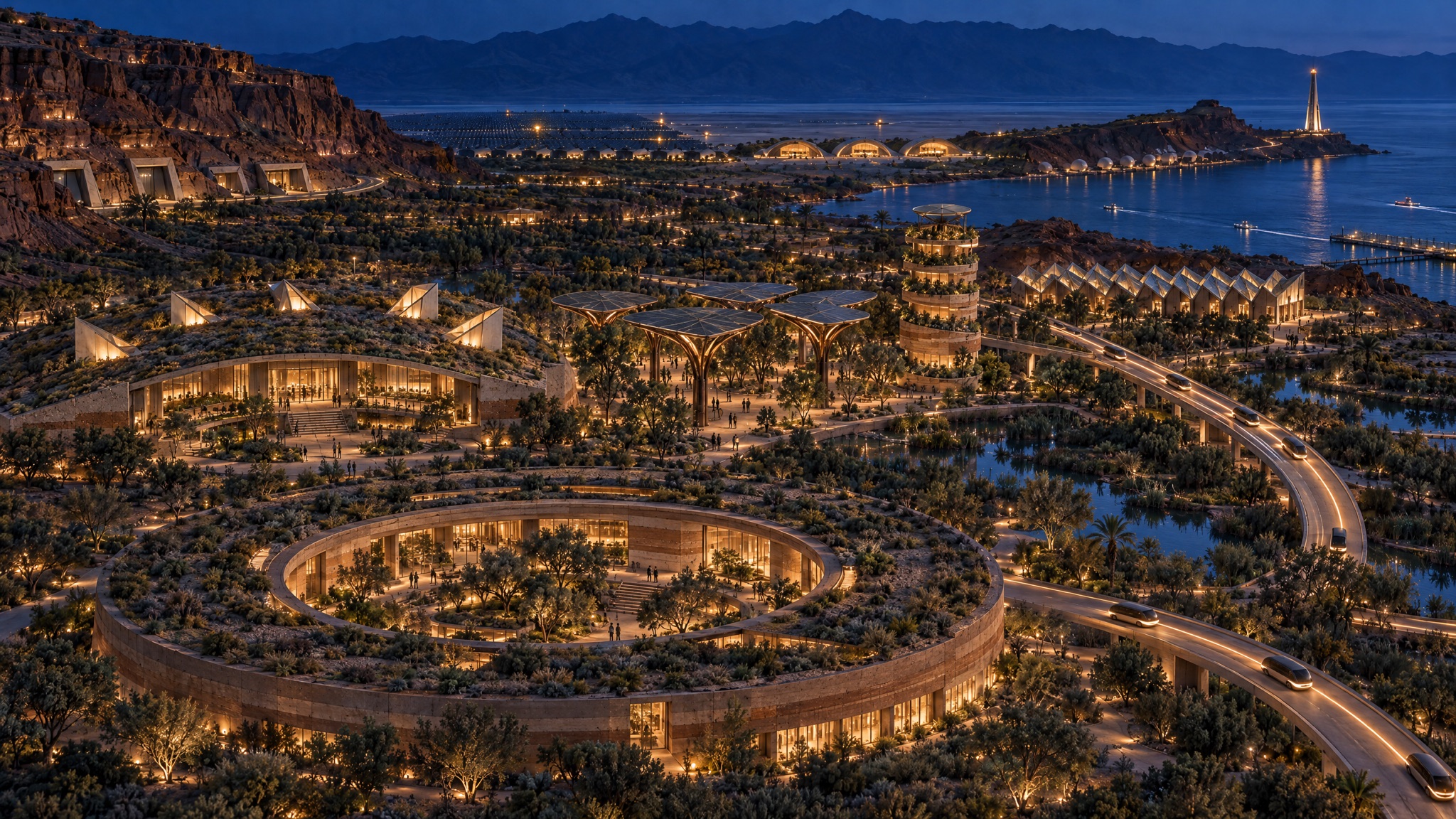
No building waits for the master plan. Printers lay walls from the basin's soil, drones seat the roofs and walking cranes set the transit arcade a module a morning, so people work in the first halls while the next ones rise beside them. The installation is operational in its first years, not its twentieth.
Ten systems, each drawn first and then grown out of its own drawing. Watch what goes in, what comes out and what it feeds. No system here stands alone, and none depends on anything outside the fence.
Three builds, stage by stage: a house printed from the ground under it, a tower grown where the water gathers, and an anchor that ties the headland to orbit. Each stage is usable before the next one starts.
One family at every scale, all electric and almost all uncrewed: from the pod you ride to work to the craft that carries seeds to the Moon. Each is opened up to show what moves it, and why a base with no fuel convoys and almost no roads needs it.
Nothing here needs a miracle. Every system starts from something already working somewhere today. What's new is building them together, in one place, on purpose, with AI and robotics compressing decades of construction into years.
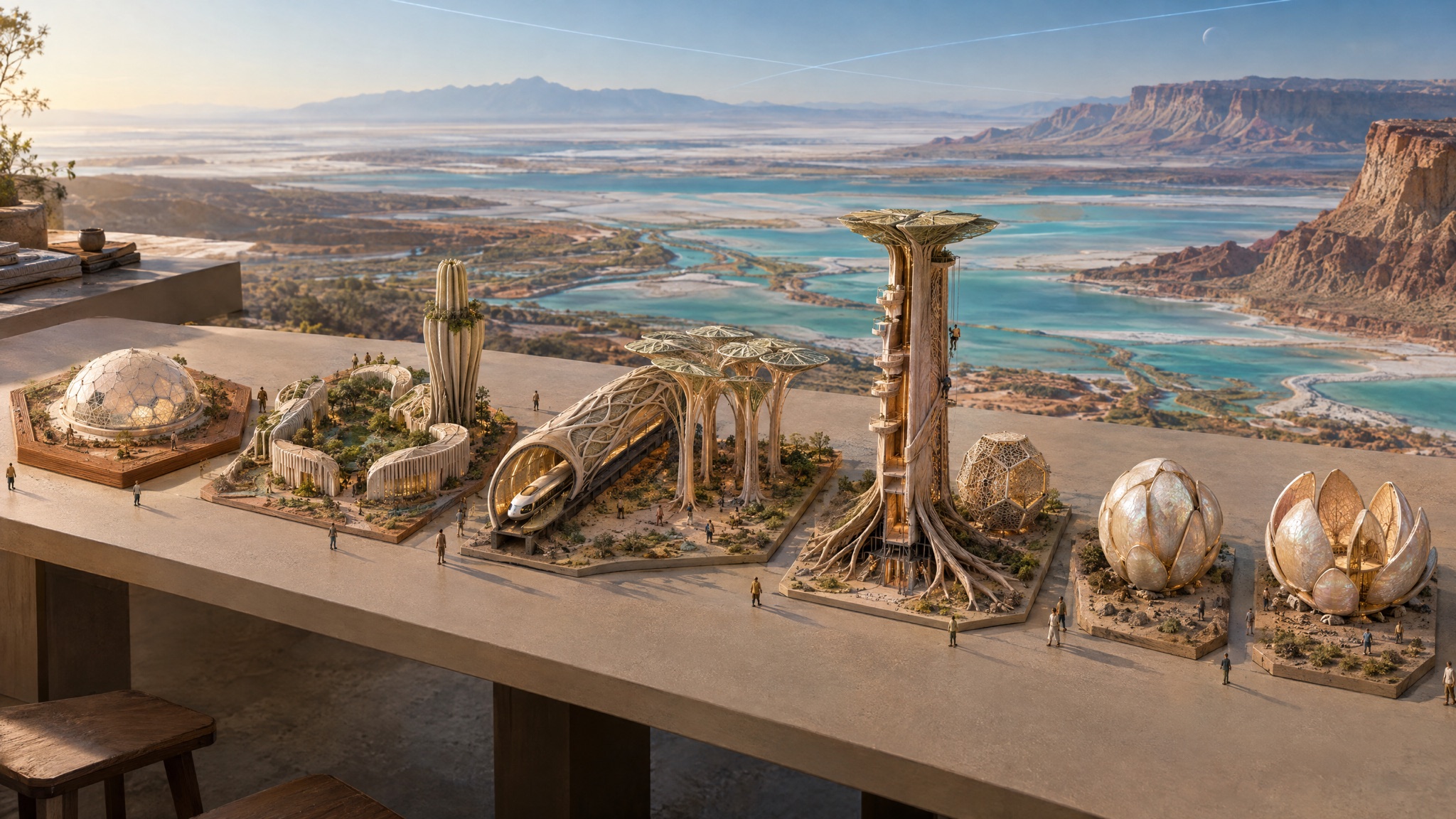
Walls are printed from site soil in bands that match the cliffs, shells are grown from mycelium composite, roofs carry native grasses and solar trees shade the plazas. Nothing on the plain rises above three storeys, so the mesa stays the tallest thing in view and the whole base reads as part of the coast.
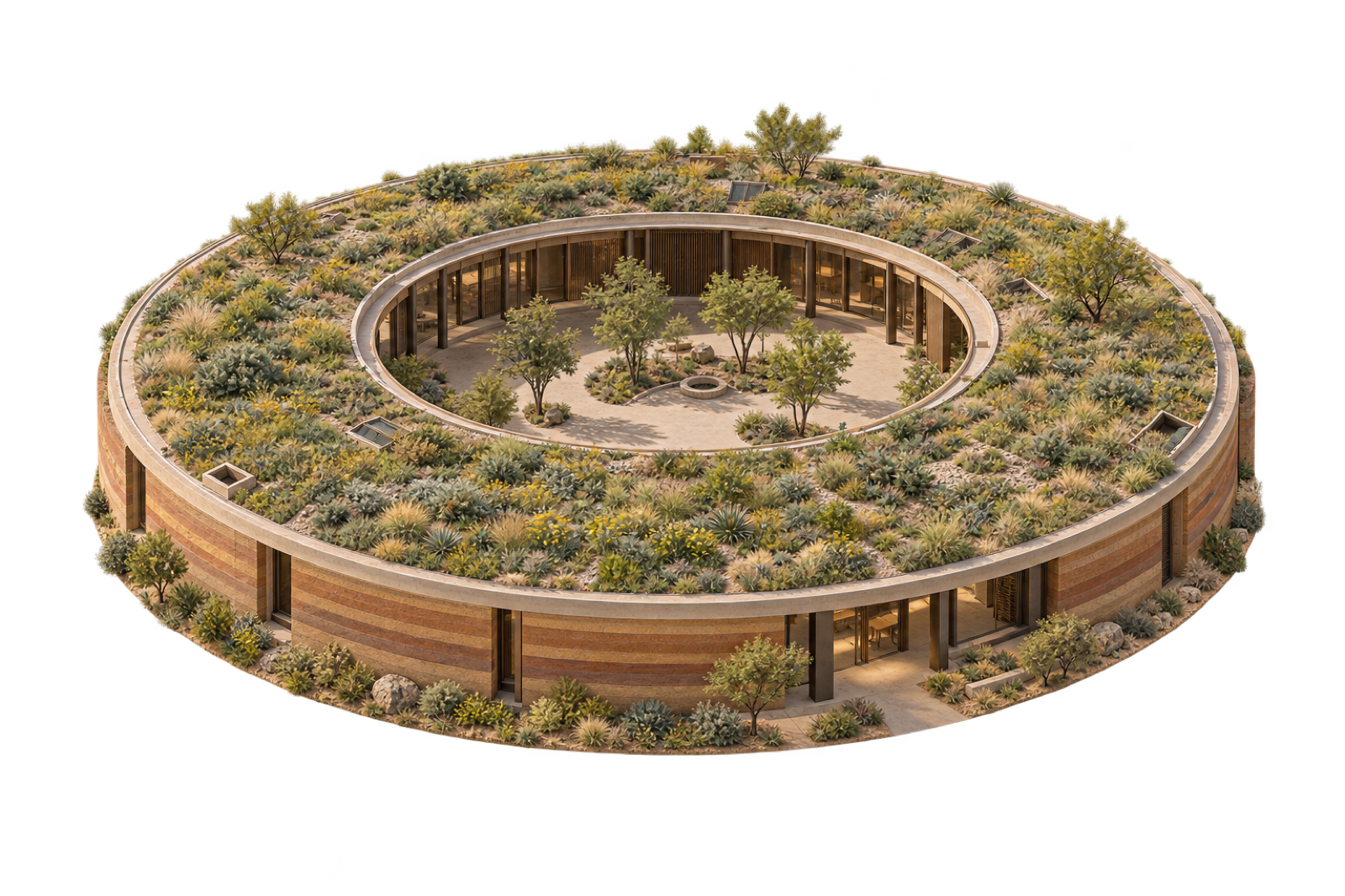
Every building and machine is drawn before it is printed, and the drawing is the instruction the printer follows. Drag across to compare the plan with the place.
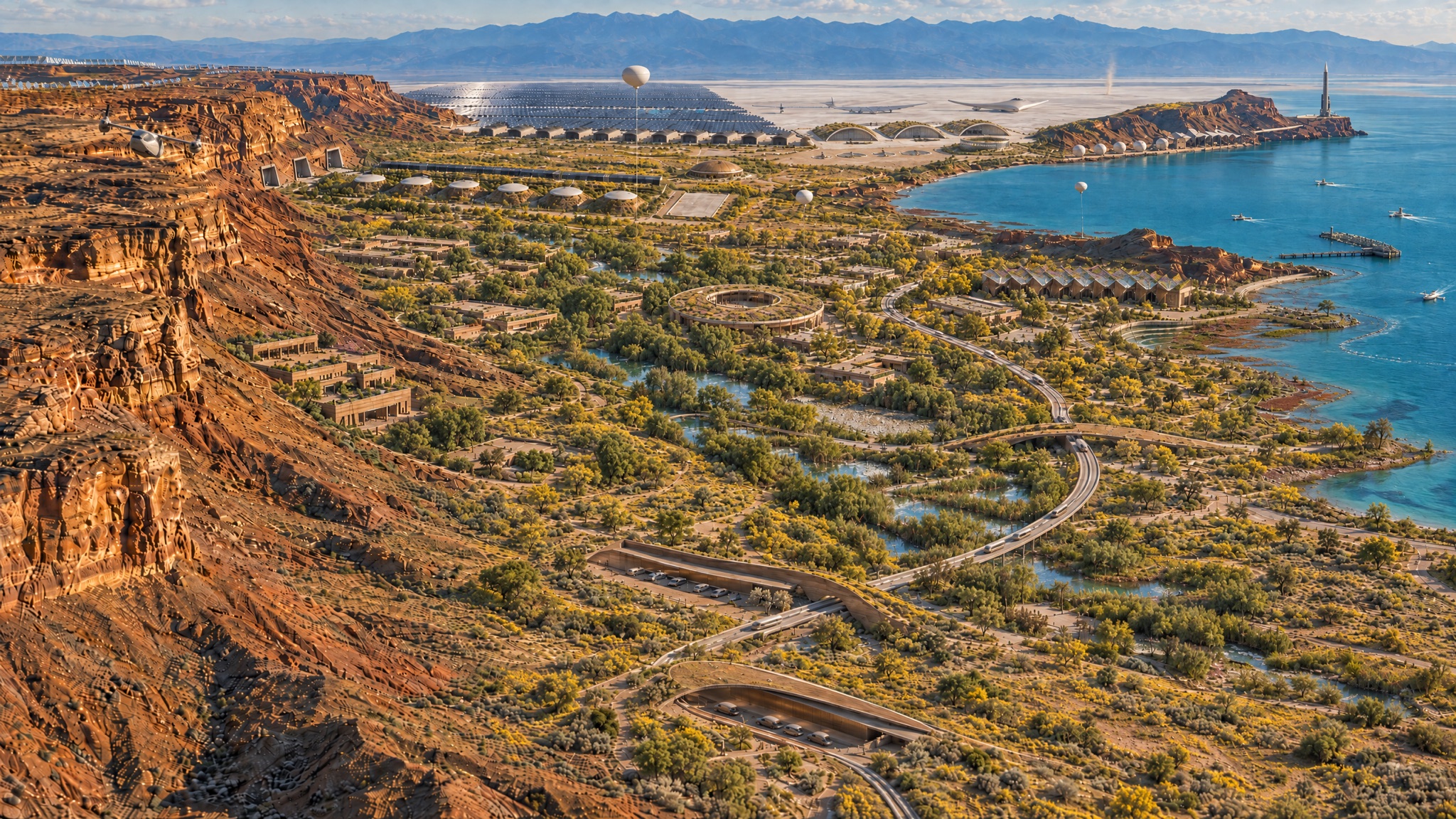
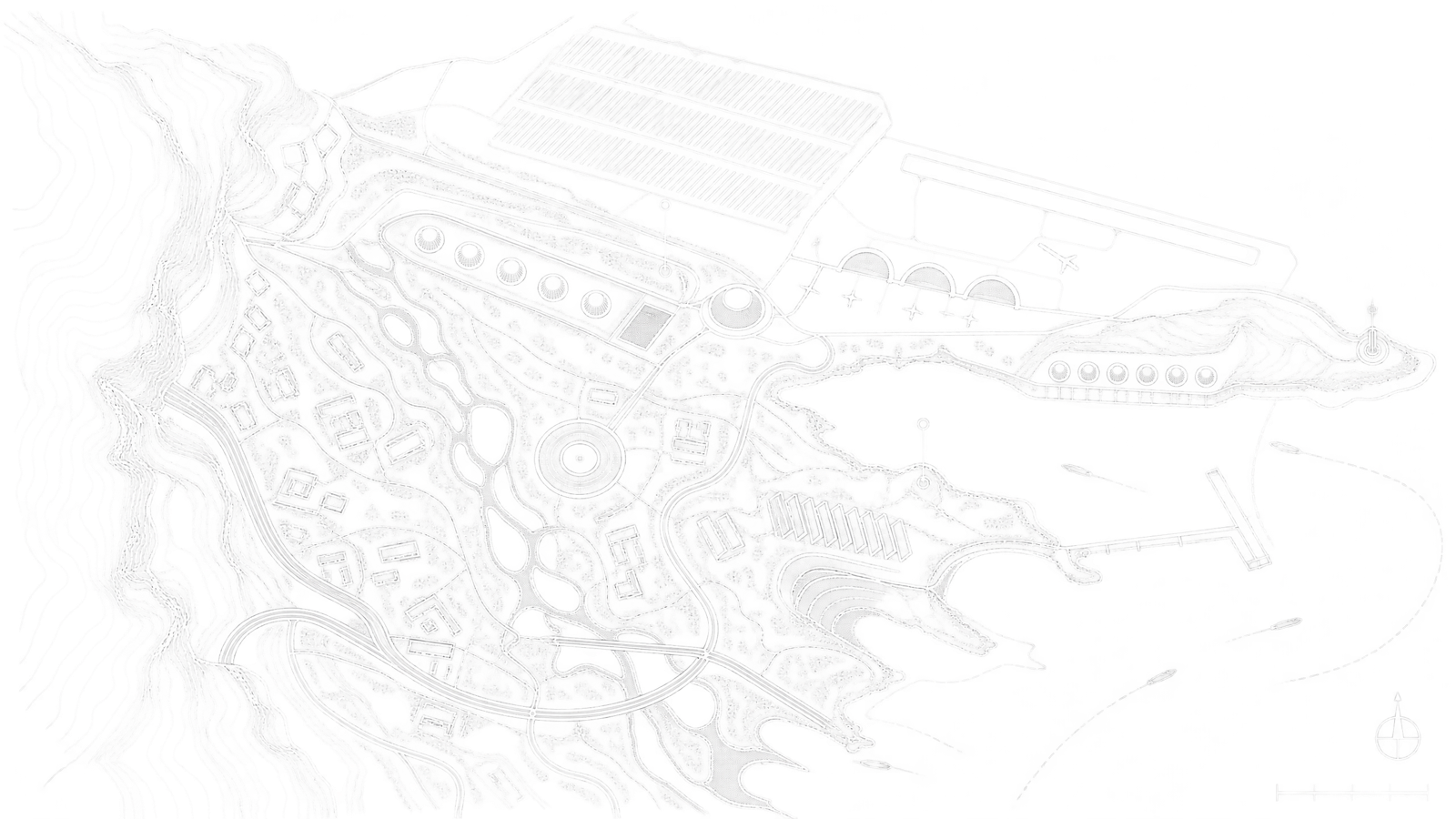
Drag to compare the drawing with the built place
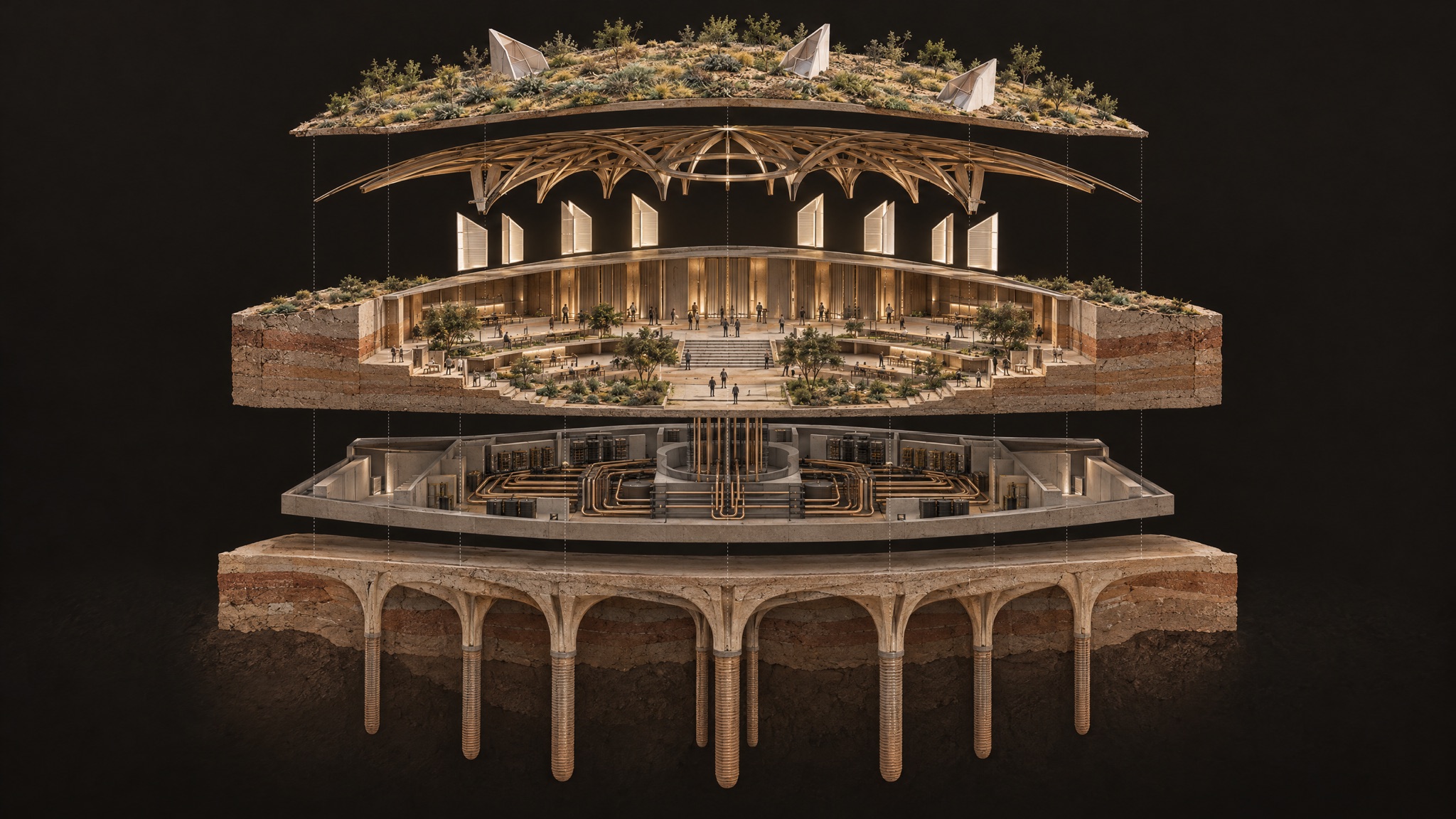
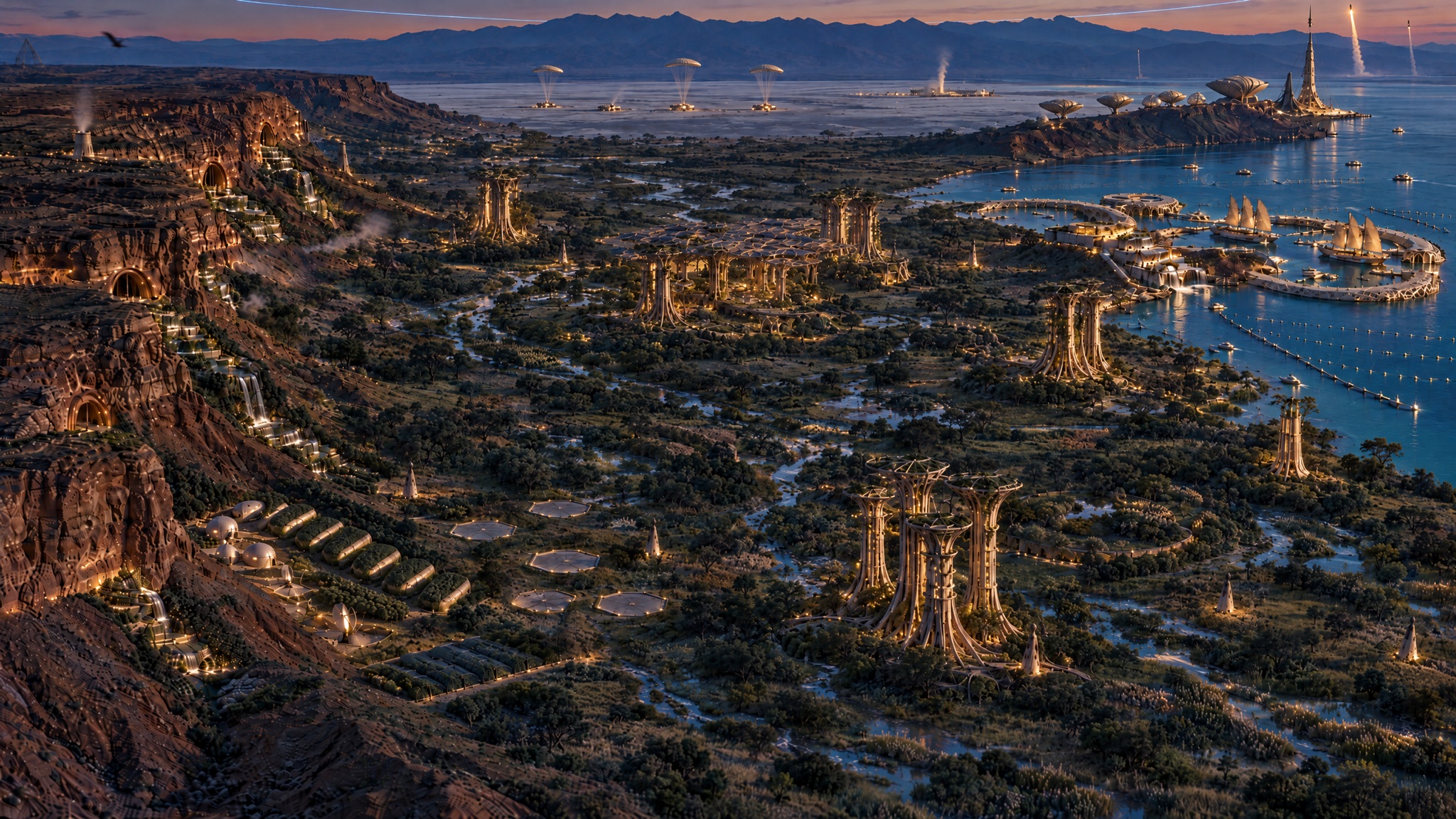
One unmarked family of quiet machines surveys, builds, carries and tests. Electric, mostly uncrewed, and designed to be repaired on site with parts the base makes itself.

Eight specialists designed this world before a single picture was made. Their decisions became design sheets, and every frame was built from those sheets, so a building, a machine or a person looks the same wherever it appears. Hover a sheet to see which frames it shaped.
Each installation is self-sufficient, and none is alone. The template is repeated site by site; they share what they learn, test for each other, back each other up when one goes quiet, and reach orbit together.
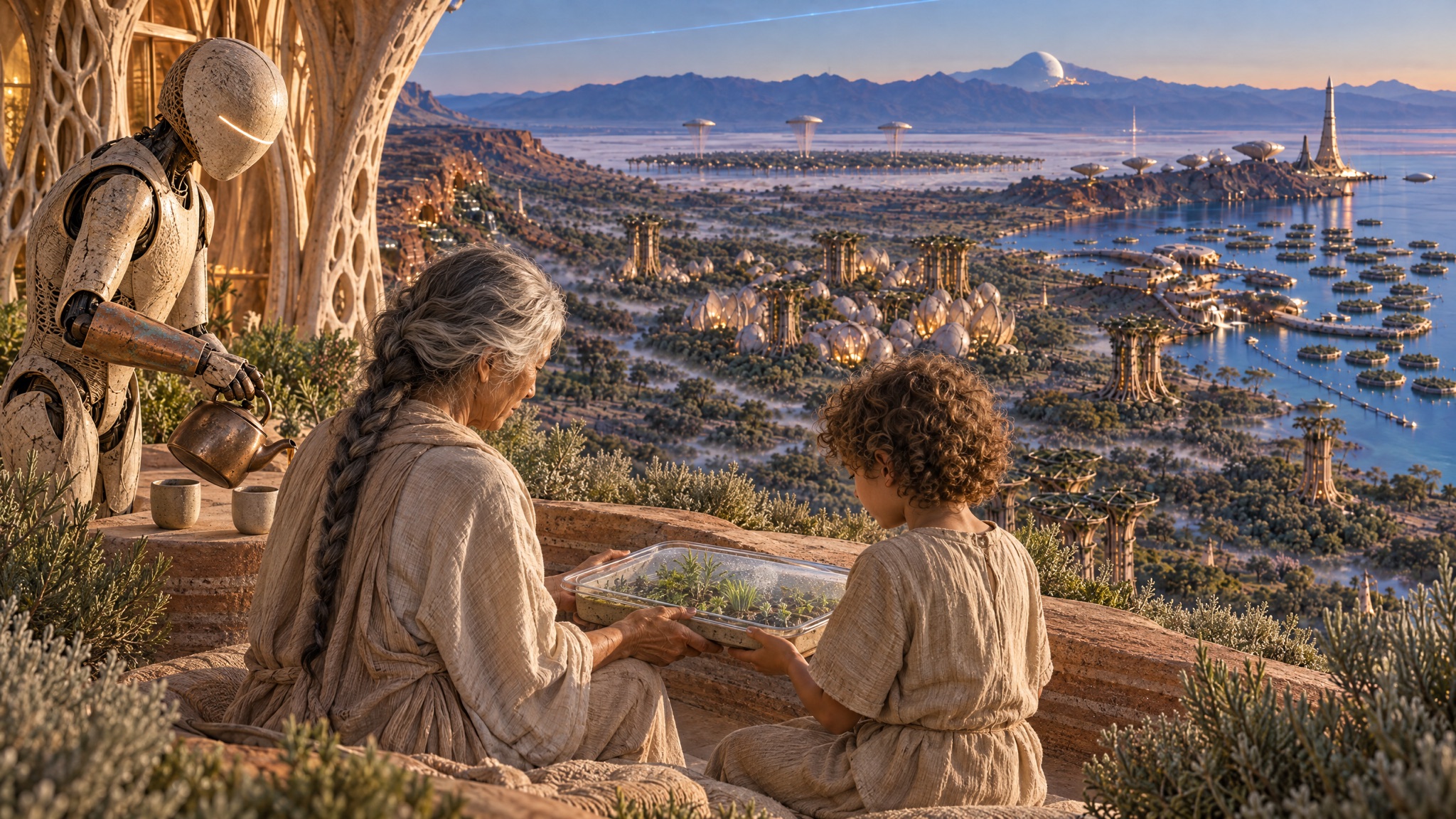
The future of installations starts now.
Watch it grow again